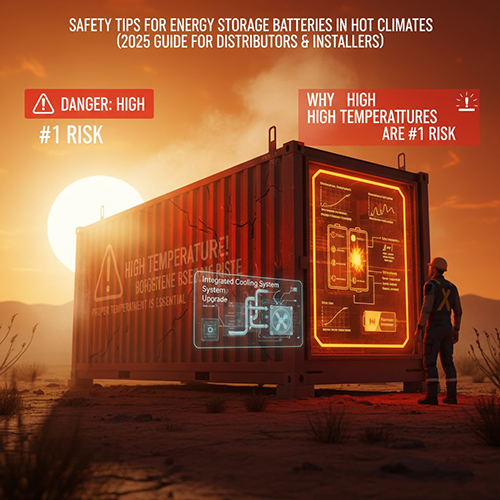
Why High Temperatures Are the #1 Risk for Lithium Energy Storage Systems in Hot Regions?High heat accelerates battery aging, increases internal resistance, and raises the risk of thermal runaway. In hot climates, improper installation or cooling can cause capacity loss, BMS failures, and system shutdowns. Proper temperature management and climate-adapted designs are essential for safe and reliable ESS performance.
Best Battery Chemistries for Hot Climates: LFP vs NMC in Extreme Heat
Battery chemistry selection is critical for ensuring long-term safety and performance in hot regions. Lithium iron phosphate (LFP) batteries are widely recognized as the best choice for high-temperature environments due to their thermal stability, higher tolerance to heat, and lower risk of thermal runaway compared to nickel-manganese-cobalt (NMC) cells.
LFP chemistry maintains structural integrity under stress, making it suitable for desert regions, tropical zones, and markets where grid instability amplifies environmental risks. NMC, while offering higher energy density, becomes more vulnerable when exposed to sustained heat and requires more aggressive cooling management.
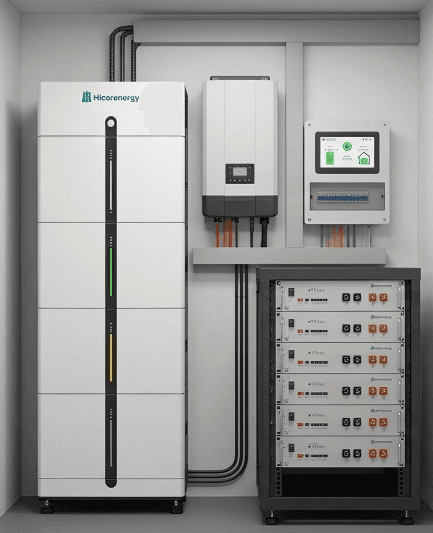
Hicorenergy's LFP-based systems—including I-BOX 48100R, SHV48100, and Si LV1—are engineered with BMS protections, wide temperature ranges, and high-efficiency cell designs. These systems maintain stable performance even in regions exceeding 40°C, making them a safer option for distributors and installers operating in Africa, Southeast Asia, and the Middle East.
Maximum Operating Temperature Limits You Must Never Exceed
Exceeding safe temperature thresholds can rapidly degrade lithium battery performance. Most ESS systems function optimally between 0°C and 45°C, though well-designed LFP units tolerate brief peaks above this range. However, installers should never allow sustained exposure above 50°C, as it accelerates chemical breakdown, weakens insulation, and increases the probability of thermal events. Strict monitoring and shade protection are critical.
Essential Cooling Solutions for ESS in Desert and Tropical Areas
Effective thermal management is essential for Battery Energy Storage in Hot Climates. In desert regions, ambient temperatures can exceed 45°C, placing constant stress on battery enclosures. Active cooling systems—such as forced-air ventilation, inverter-integrated cooling fans, and climate-controlled ESS cabinets—help maintain internal temperatures within safe operating limits.
In tropical areas with high humidity, moisture control becomes equally important. Corrosion, condensation, and short circuits can occur when enclosures lack proper sealing and airflow. IP54–IP65 rated housings, heat-resistant wiring, and moisture-isolated compartments ensure long-term safety.
Hicorenergy’s C&I systems, such as the Si Station 186 air-cooled cabinet and Si Station 230 liquid-cooled solution, are designed for extreme climates. Their high-efficiency cooling architecture stabilizes batteries under heavy load, allowing continuous operation in challenging outdoor environments. Remote monitoring via Hicorenergy’s smart platform further ensures real-time alerts when temperature thresholds approach unsafe levels.
Installation & Site Selection Rules to Prevent Thermal Runaway in 40°C+ Environments
Proper site design dramatically reduces the likelihood of thermal incidents when deploying Battery Energy Storage in Hot Climates. Installers must prioritize shaded, ventilated environments that prevent sunlight exposure to battery enclosures. Structures such as sun canopies, insulated containers, or ventilated indoor rooms significantly reduce heat accumulation.
Ground surfaces also matter—installing ESS units on concrete pads instead of metal platforms helps limit conductive heat transfer. Ensuring adequate airflow clearance around the system prevents heat buildup and supports efficient cooling.
In this context, Hicorenergy products such as the SHV48100 and I-BOX 48100R offer advantages: their wide operating temperature ranges, LFP chemistry, and robust BMS protections minimize thermal risks. The Si LV1’s integrated heating and monitoring system also ensures stable operation across diverse climates, making these models ideal for distributors and installers working in 40°C+ markets.
Recommended Safety Certifications and Official Resources for Distributors and Installers
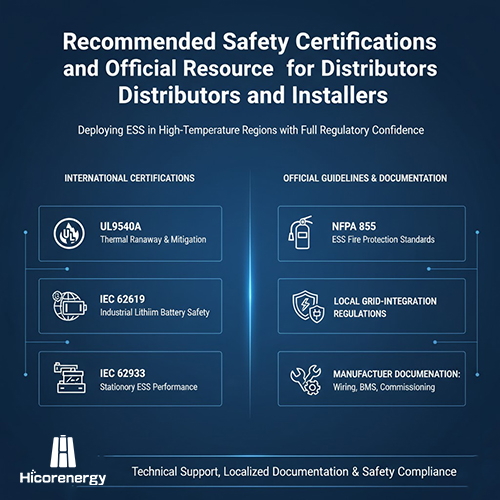
Professionals working with energy storage systems in high-temperature regions should be familiar with leading international certifications. UL9540A provides guidance on thermal runaway behavior and mitigation. IEC 62619 outlines safety requirements for industrial lithium batteries, while IEC 62933 covers system-level performance for stationary ESS.
Installers should also reference NFPA 855 for ESS fire protection standards and local grid-integration regulations specific to their region. Manufacturer documentation, including commissioning guidelines, wiring diagrams, and BMS protocols, should be strictly followed. Hicorenergy offers detailed technical support, localized documentation, and safety compliance information to ensure partners can deploy systems with full regulatory confidence.
Summary
Hicorenergy’s LFP-based energy storage solutions deliver stable, safe performance in high-temperature environments, supported by advanced cooling, robust BMS protection, and reliable global certifications—making them ideal for distributors and installers in hot climates.
Contact:
Email: info@hicorpower.com
WhatsApp: +86 181-0666-3226