Hicorenergy Batteries can be connected in series for higher voltage, provided that voltage ratings, compatibility, and safety guidelines are strictly followed. Proper configuration ensures stable performance, improved system efficiency, and reliable energy storage for residential and commercial applications. Always verify specifications and use professional installation practices.
Understanding Hicorenergy Batteries: Features and Specifications
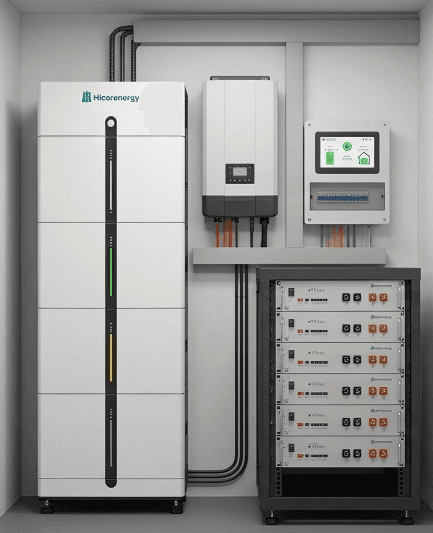
Hicorenergy Batteries are engineered with Tier 1 automotive-grade LiFePO4 cells and a self-developed Battery Management System (BMS) featuring dual MCU protection. With over 6,000 cycles at 90% DOD and more than 95% round-trip efficiency, they are designed for long-term reliability. Products such as the I-BOX 48100R, C5°, Si LV1, and SHV48100 offer flexible installation, remote monitoring, and scalable configurations. These batteries support wide inverter compatibility and are suitable for off-grid, backup, peak shaving, and demand response applications.
Benefits of Connecting Batteries in Series for Higher Voltage
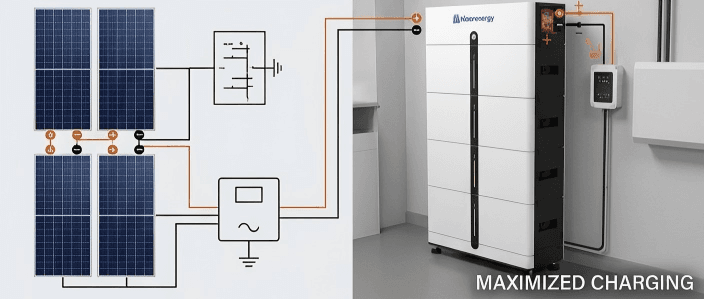
Connecting Hicorenergy Batteries in series increases the overall system voltage while maintaining the same capacity (Ah). For distributors and installers, this configuration enables compatibility with high-voltage inverters and commercial systems that require elevated DC input levels.
Higher voltage systems typically reduce current flow for the same power output, minimizing cable losses and improving overall system efficiency. This translates into better energy utilization and potentially lower balance-of-system costs. In commercial and industrial (C&I) scenarios, higher voltage setups also allow more streamlined integration with grid-tied or hybrid inverters.
Series connections are especially beneficial for applications such as distributed energy storage, charging stations, factories, and buildings where higher voltage architecture improves operational stability. With proper configuration, installers can design scalable solutions that meet evolving customer demands without compromising safety or performance.
How to Safely Connect Hicorenergy Batteries in Series
To safely connect Hicorenergy Batteries in series for higher voltage, installers must ensure that all batteries are of the same model, capacity, and state of charge before connection. Carefully follow product manuals and confirm that the inverter supports the target voltage range. Use appropriate connectors such as PHOENIX M6 Bolt or Amphenol SurLok Plus where applicable. Verify communication settings and BMS parameters to ensure synchronized operation. Professional installation and system testing are strongly recommended to guarantee optimal performance and long-term reliability.
Voltage Requirements and Compatibility for Series Connections
When designing a higher voltage system using Hicorenergy Batteries, voltage compatibility is the first technical checkpoint. Each battery module has a nominal voltage rating, and connecting units in series increases the total system voltage by summing individual voltages. For example, if one module operates at 48V nominal, connecting two in series results in approximately 96V.
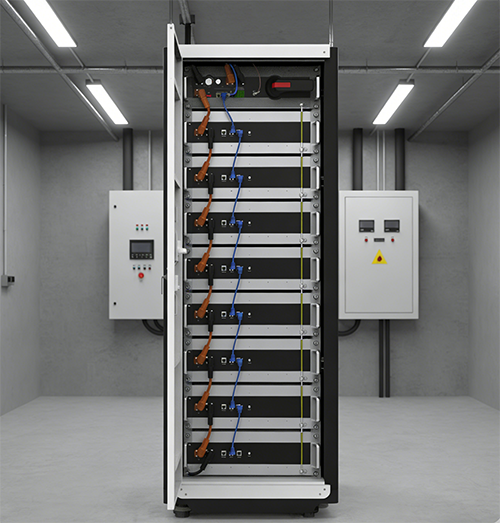
Installers must verify the maximum input voltage supported by the inverter or hybrid PCS. Exceeding this limit may cause system faults or equipment damage. In systems like the SHV48100 distributed energy storage cabinet, up to eight sets can be connected in series, offering flexible configuration for 25.6kWh to 40.96kWh storage requirements.
Communication compatibility is equally important. The integrated BMS in Hicorenergy Batteries ensures coordinated performance, but installers should confirm CAN or RS485 communication protocols align with inverter specifications. Proper voltage planning not only ensures compliance but also maximizes efficiency and operational lifespan.
Potential Risks and Safety Considerations When Connecting in Series
While connecting batteries in series for higher voltage offers advantages, improper installation can introduce risks. Uneven state of charge between modules may lead to imbalance, reduced cycle life, or BMS-triggered protection shutdowns. Therefore, pre-balancing batteries before installation is essential.
Thermal management is another critical factor. Although Hicorenergy products feature wide operating temperature ranges and optional heating systems, higher voltage systems may operate under heavier loads in C&I environments. Adequate ventilation and adherence to IP ratings such as IP20 or IP55 are necessary depending on installation conditions.
Protection devices, including DC breakers and fuses (integrated in models like Si LV1), add additional safety layers. Installers should also follow local electrical codes and certification requirements. Proper cable sizing and torque settings prevent overheating and connection failures. Ultimately, professional system design and compliance with manufacturer guidelines mitigate operational risks.
Where to Buy Hicorenergy Batteries for Distributors and Installers
Distributors and installers seeking reliable higher voltage solutions can source directly from Hicorenergy. As a global lithium battery solution provider with over 20 years of industry expertise, Hicorenergy operates production bases in China and Vietnam, along with offices in North America and Europe, ensuring stable supply and responsive service.
The product portfolio includes residential models such as I-BOX 48100R and Si LV1, distributed systems like SHV48100, and C&I solutions including Si Station 186 (186kWh air cooling cabinet) and Si Station 230 (230kWh liquid cooling cabinet). These systems support grid-tied and off-grid configurations, peak shaving, emergency backup, and renewable integration.
With scalable designs, high cycle life, 10-year warranties, and global safety compliance, Hicorenergy Batteries provide distributors and installers with competitive, cost-effective energy storage solutions suitable for diverse markets.
In summary, Hicorenergy Batteries can be connected in series for higher voltage when voltage compatibility, safety standards, and professional installation practices are respected. Their scalable design, advanced BMS, and global support network make them a dependable choice for residential and commercial energy storage projects.
For inquiries and partnership opportunities:
Email: info@hicorpower.com
WhatsApp: +86 181-0666-3226