Battery Cycles and Depth (DOD) are critical factors that determine battery lifespan, warranty value, and overall return on investment. A complete cycle refers to one full charge and discharge process, while DOD measures how much capacity is used. Understanding both helps distributors and installers select durable, cost-effective energy storage systems.
What Is a Complete Cycle in Energy Storage?
A complete cycle in energy storage refers to one full charge and discharge of a battery’s usable capacity. For example, if a 10 kWh battery is discharged by 100% of its available capacity and then fully recharged, it counts as one cycle. However, cycles are cumulative. Two separate 50% discharges followed by recharging also equal one complete cycle.
Understanding this definition is essential for evaluating performance claims. Manufacturers typically rate lithium batteries based on the number of cycles they can deliver before capacity declines to 80% of the original value. For distributors and installers, cycle life directly impacts long-term reliability and customer satisfaction.
Depth of Discharge (DOD) and Its Role in Battery Life
Depth of Discharge (DOD) indicates the percentage of a battery’s capacity that has been used during a discharge cycle. For example, if 90% of a battery’s stored energy is used, the battery operates at 90% DOD. In lithium iron phosphate (LiFePO4) systems, higher DOD can be achieved safely compared to traditional lead-acid batteries.
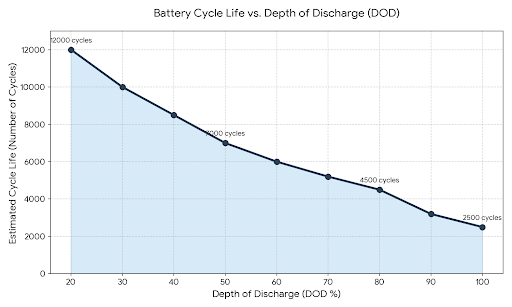
However, Battery Cycles and Depth are closely related. Generally, the higher the DOD per cycle, the greater the stress on battery cells. Repeated deep discharges may reduce total cycle life over time. According to industry insights from Hicorpower, maintaining an optimal DOD range significantly improves long-term battery stability and performance.
For distributors and installers, recommending appropriate DOD settings ensures a balance between usable capacity and extended service life, ultimately reducing maintenance concerns and warranty claims.
Partial vs. Complete Cycles: What’s the Difference?
Partial cycles occur when a battery is only partially discharged before being recharged. Unlike traditional battery technologies, lithium batteries handle partial cycles efficiently without memory effects. In fact, moderate DOD with more frequent partial cycles can extend overall service life.
Understanding the relationship between partial usage and full Battery Cycles and Depth helps professionals design smarter energy storage solutions tailored to residential and commercial load profiles.
How Battery Cycles Impact Warranty and Service Life
Battery cycle ratings are not just technical specifications; they directly affect warranty terms and long-term value. Most high-quality lithium energy storage systems are rated for over 6,000 cycles at 80–90% DOD, typically retaining at least 80% of their original capacity after this period.
For distributors and installers, this means that a battery operating at one full cycle per day could potentially last over 10 years. However, actual performance depends on environmental conditions, charging rates, DOD settings, and system integration quality.
Improper configuration—such as consistently running at maximum DOD in high-temperature environments—can shorten service life and increase after-sales service demands. Therefore, selecting batteries with advanced Battery Management Systems (BMS), temperature protection, and real-time monitoring is essential.
Reliable manufacturers design systems that align warranty coverage with realistic cycle expectations. This ensures transparency and protects installers from future disputes. Ultimately, understanding Battery Cycles and Depth enables better ROI calculations and strengthens trust between suppliers, installers, and end users.
Maximizing Battery Lifespan: Tips for Reducing the Depth of Discharge
Optimizing DOD is one of the most effective strategies for extending lithium battery lifespan. While many LiFePO4 batteries can safely operate at 90% DOD, reducing daily discharge to 70–80% can significantly increase total cycle count.
Installers can implement smart energy management strategies such as:
-
Configuring reserve capacity for backup power
-
Using time-of-use programming to avoid unnecessary deep discharge
-
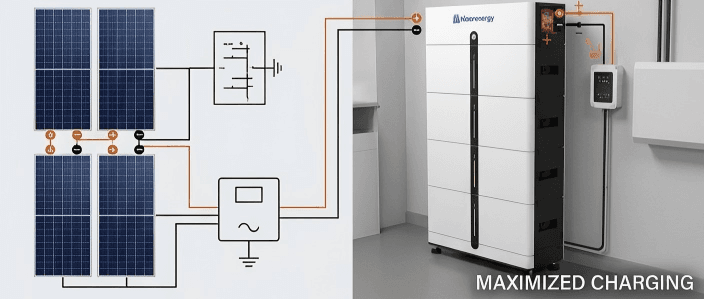
Integrating solar generation effectively to reduce grid dependence
-
Monitoring real-time performance via cloud-based platforms
Temperature management is equally important. Batteries operating within recommended temperature ranges maintain higher efficiency and slower degradation rates. Advanced systems with heating functions and intelligent monitoring further optimize Battery Cycles and Depth control.
For distributors, educating customers about proper DOD settings not only enhances product performance but also reduces service interventions and strengthens brand reputation.
Where to Buy Reliable Energy Storage Systems for Distributors and Installers
Selecting a reliable supplier is as important as understanding Battery Cycles and Depth. Hicorenergy, a global lithium battery solution provider with over 20 years of industry expertise, offers advanced residential and C&I energy storage systems designed for long-lasting performance.
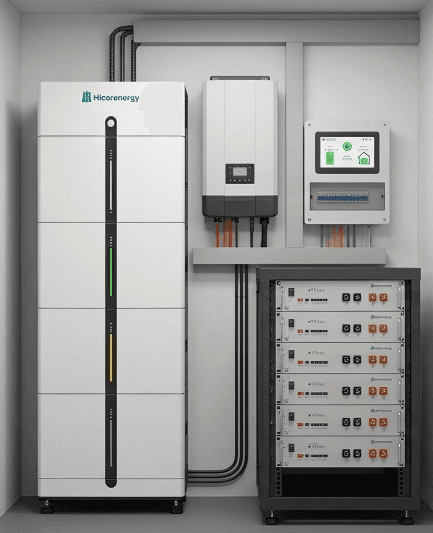
Products such as the I-BOX 48100R residential battery deliver ≥6000 cycles at 90% DOD with over 95% round-trip efficiency and a 10-year warranty. The modular Si LV1 low-voltage system features plug-and-play installation, scalable capacity up to 122.88 kWh, and integrated safety protections including UL9540A-tested design.
For commercial and industrial applications, the Si Station 186 and Si Station 230 cabinets provide high-capacity, grid-certified solutions with flexible configurations and IP-rated enclosures. These systems are engineered for peak shaving, backup power, and distributed energy storage scenarios.
With multiple production bases, global service networks, and local delivery support, Hicorenergy ensures stable supply, technical assistance, and responsive after-sales service—key considerations for professional distributors and installers.
Conclusion
Understanding Battery Cycles and Depth (DOD) is essential for maximizing lifespan, ensuring warranty compliance, and improving ROI. Hicorenergy’s advanced lithium energy storage systems are engineered to deliver high cycle life, optimized DOD performance, and reliable long-term operation for distributors and installers worldwide.
For inquiries:
Email: info@hicorpower.com
WhatsApp: +86 181-0666-3226