 Lithium-Ion Batteries: The Market Leader in Industrial Energy Storage
Lithium-ion battery storage has become the benchmark for modern industrial energy storage solutions. Its high energy density, compact footprint, and rapid response time make it ideal for commercial battery storage, manufacturing plants, microgrids, and grid-scale energy storage projects. With round-trip efficiencies often exceeding 95%, lithium-ion systems deliver consistent performance in peak shaving, frequency regulation, and backup power applications.
Unlike flywheels, which primarily provide short-duration power, or flow batteries, which require larger installation spaces, lithium-ion battery storage offers flexible deployment across distributed and centralized industrial energy storage solutions. Its modular architecture allows seamless scalability, ensuring that commercial and industrial (C&I) operators can optimize their C&I energy storage ROI while maintaining system reliability and cost control.
Comparing Industrial Applications: When to Choose Lithium-Ion vs. Flywheels vs. Flow Batteries
Selecting the right industrial energy storage solutions depends on application scenarios, budget, and operational goals. Flywheels excel in ultra-fast frequency regulation, while flow batteries are suited for long-duration grid-scale energy storage. However, lithium-ion battery storage bridges performance, footprint, and cost, making it the most versatile commercial battery storage option. Understanding these distinctions helps businesses align technology choices with operational efficiency and long-term C&I energy storage ROI objectives.
Safety and Lifespan: How Lithium-Ion Stacks Up Against Flywheels and Flow Batteries
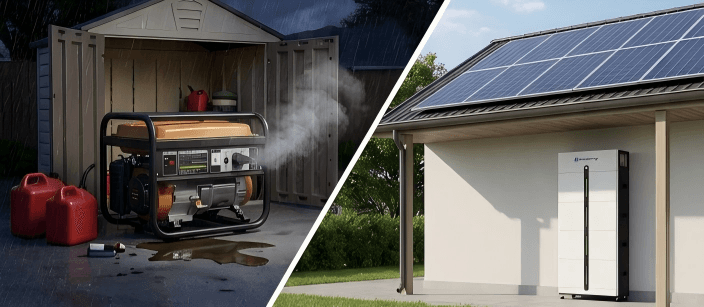
Safety and longevity are central concerns in industrial energy storage solutions. Flywheels rely on high-speed rotating masses, which demand strong containment systems and precise engineering controls. While they offer long mechanical lifespans, their application scope remains limited to short-duration discharge cycles.
Flow batteries, known for their extended cycle life and stable chemistry, are often used in grid-scale energy storage. However, they require complex fluid management systems and larger physical infrastructure, increasing installation and maintenance complexity for commercial battery storage environments.
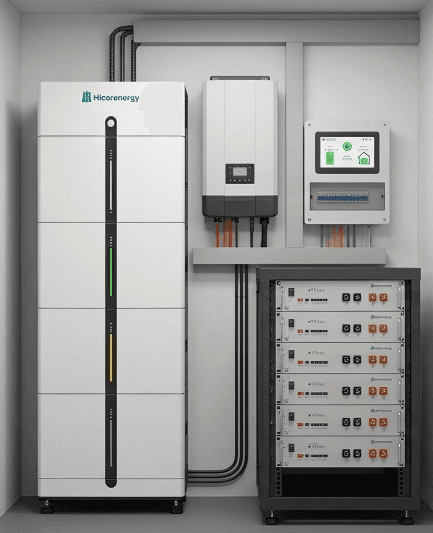
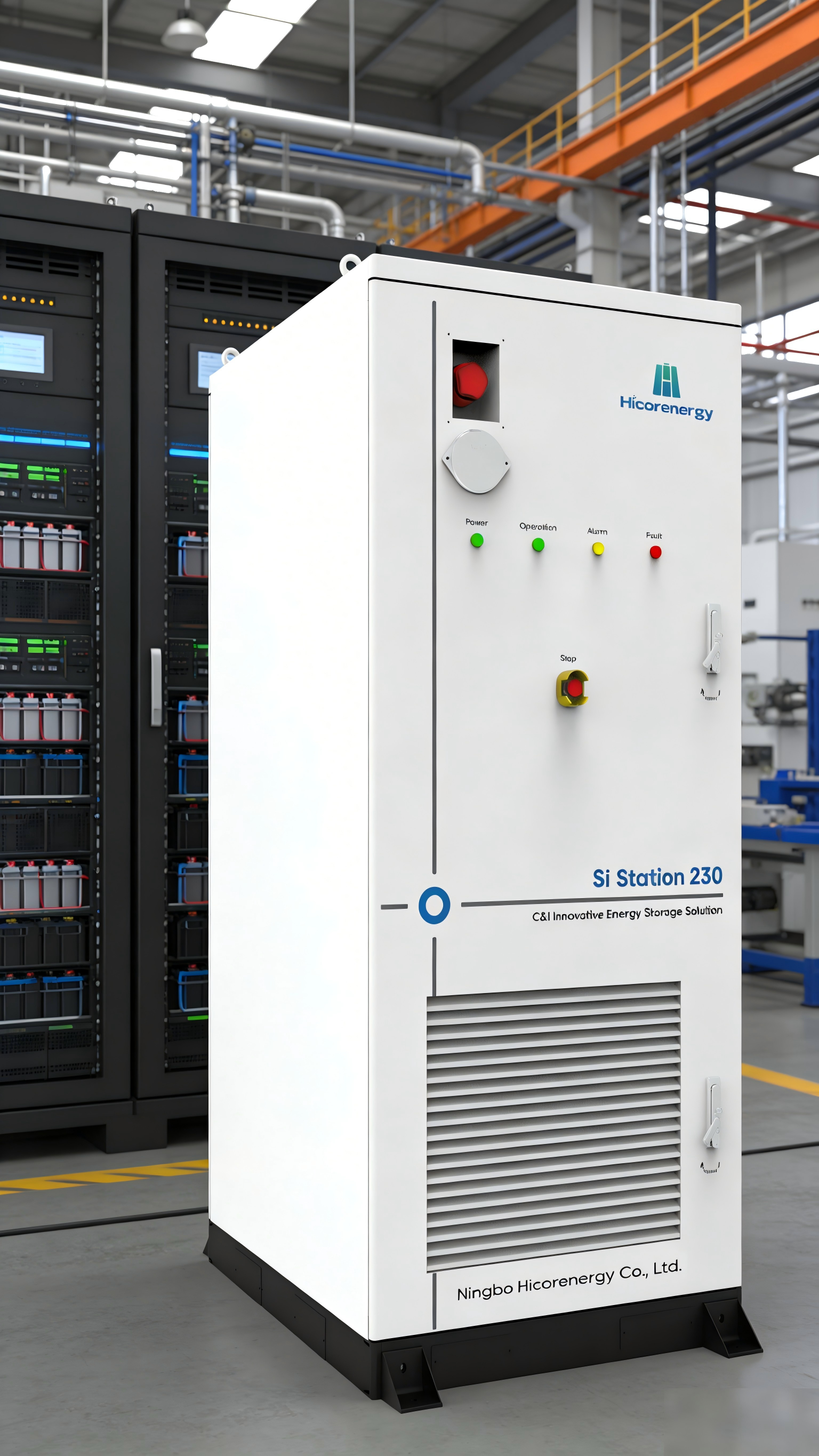
Lithium-ion battery storage, particularly LFP (LiFePO4) chemistry, provides a balanced approach between safety and lifespan. Advanced battery management systems (BMS), thermal management, and intelligent monitoring significantly reduce operational risks. For example, Hicorenergy’s SI Station186 and SI Station230 C&I cabinets are engineered with integrated safety protections, IP54-rated enclosures, and modular designs suitable for demanding industrial energy storage solutions. With over 6,000 cycles and high round-trip efficiency, these systems enhance C&I energy storage ROI while ensuring safe, stable grid-scale energy storage operations.
The Future of Industrial Storage: Lithium-Ion Advancements and Hybrid System Integration
The evolution of industrial energy storage solutions increasingly favors lithium-ion battery storage due to ongoing technological advancements. Improvements in energy density, liquid cooling systems, and AI-driven monitoring are reinforcing its dominance in commercial battery storage and grid-scale energy storage deployments.
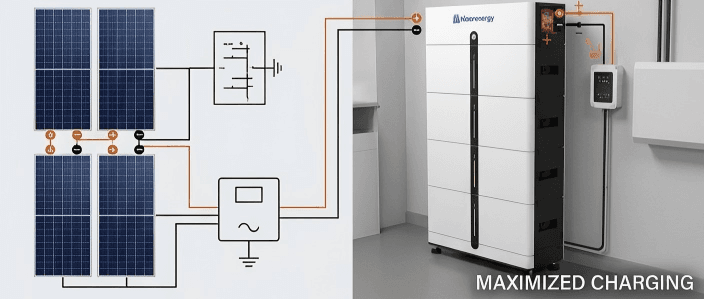
Hybrid configurations are also reshaping industrial energy storage solutions. Lithium-ion systems are now integrated with renewable energy plants, microgrids, and backup generators to create flexible, high-performance ecosystems. For example, Hicorenergy’s modular solutions such as the SI LV1 stackable system allow scalable deployment for commercial battery storage, while large-capacity systems like SI Station230 support high-demand grid-scale energy storage scenarios.
As battery costs continue to decline and system integration becomes more intelligent, lithium-ion battery storage will further improve C&I energy storage ROI. Its adaptability across manufacturing, commercial buildings, renewable plants, and distributed networks makes it the backbone of next-generation industrial energy storage solutions worldwide.
Hicorenergy is a leading provider of lithium-ion industrial energy storage solutions, offering residential, commercial battery storage, and grid-scale energy storage systems with global certifications and localized service support.
For inquiries:
Email: info@hicorpower.com
WhatsApp: +86 181-0666-3226