The Critical Role of Thermal Management in Energy Storage
As the world increasingly shifts towards renewable energy and smarter grids, the demand for high-capacity battery energy storage systems (BESS) has skyrocketed. For commercial and industrial applications, these systems are pivotal for ensuring energy stability, managing peak loads, and integrating seamlessly with sources like wind and solar. Central to the performance, safety, and longevity of these advanced systems is a sophisticated thermal management solution, embodied by the modern Liquid Cooling Battery Cabinet. Without effective temperature control, battery cells can degrade quickly, lose efficiency, and even pose a significant safety risk. Therefore, managing the intense heat generated during rapid charge and discharge cycles is not just an operational detail but a fundamental requirement for reliable energy storage.
Advancements in Battery Cabinet Cooling Technology
Historically, battery thermal management relied on simpler methods like air cooling, where fans circulate ambient air to dissipate heat. While sufficient for smaller, low-power applications, this approach falls short in the context of today's high-density energy storage units. The evolution of Battery Cabinet Cooling Technology has been driven by the need to handle greater thermal loads in more compact spaces. As battery modules are packed tighter to increase energy density, air cooling becomes less effective, often resulting in uneven temperature distribution and hot spots that accelerate cell degradation. This technological gap has paved the way for more direct and efficient solutions capable of maintaining optimal operating temperatures across the entire battery pack, ensuring both performance and safety under demanding conditions.
How Liquid Cooled Battery Systems Enhance Performance
This is where Liquid Cooled Battery Systems represent a significant leap forward. Instead of relying on air, these systems circulate a specialized dielectric coolant through channels or cold plates that are in direct or close contact with the battery modules. This method offers vastly superior thermal conductivity, allowing for heat to be removed much more quickly and efficiently. The primary advantage is the ability to maintain a uniform and stable temperature across all cells, which is crucial for maximizing the battery's lifespan and usable capacity. Furthermore, Liquid Cooled Battery Systems operate more quietly than their air-cooled counterparts and enable a more compact and energy-dense cabinet design, as less internal space is required for airflow. This technology is fundamental to achieving the high performance and reliability expected from modern commercial and industrial energy storage solutions.
Integrating Advanced Cooling in Modern BESS Solutions
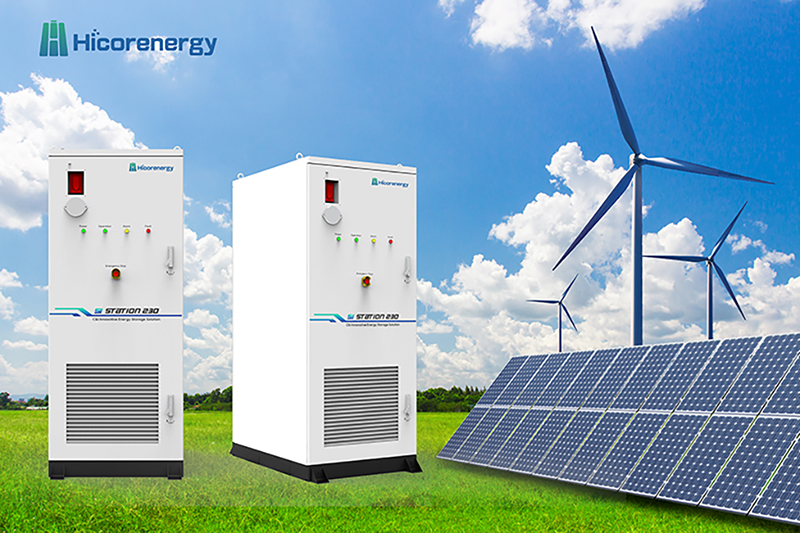
State-of-the-art products, such as Hicorenergy's SI Station series, exemplify the integration of advanced thermal management into a comprehensive energy storage solution. A modern Liquid Cooling Battery Cabinet is more than just a temperature control unit; it is an intelligent system designed for durability and efficiency. Features like real-time status indicators for power, operation, and alarms work in concert with the cooling system to provide a complete picture of the system's health. The robust construction and emergency controls further enhance safety and reliability. These integrated cabinets are essential for demanding applications, from stabilizing the grid alongside a wind turbine to providing uninterrupted power for critical industrial processes. By ensuring the battery operates within its ideal temperature range, these systems unlock their full potential, delivering consistent power and long-term value.
The Future of Energy Storage is Cool and Efficient
The trajectory of energy storage is clear: systems will continue to become more powerful, dense, and integral to our global energy infrastructure. The success of this transition hinges on continuous innovation in core components, especially thermal management. The adoption of a Liquid Cooling Battery Cabinet is a defining feature of next-generation BESS, offering unparalleled control over the operating environment. This advanced Battery Cabinet Cooling Technology not only protects the significant investment that these systems represent but also pushes the boundaries of what is possible in terms of performance and application. As we build a more sustainable and resilient future, the quiet, efficient, and powerful operation of Liquid Cooled Battery Systems will be the bedrock of a modern energy landscape.