 Importance in Today's Energy Landscape
The global energy transition is accelerating as nations shift toward cleaner electricity and reduced fossil fuel dependence. However, renewable sources like solar and wind are intermittent—power generation rarely aligns perfectly with real-time demand, creating grid instability.
This is where lithium battery farms play a transformative role. These large-scale energy storage systems store electricity when production exceeds demand and release it when needed, making them essential infrastructure for modern power grids.
A lithium battery farm represents a new generation of energy infrastructure designed to store vast amounts of electricity efficiently. Through advanced storage technology and intelligent management systems, these facilities are redefining emergency power solutions and improving energy reliability for communities, businesses, and utilities.
What Is a Lithium Battery Farm?
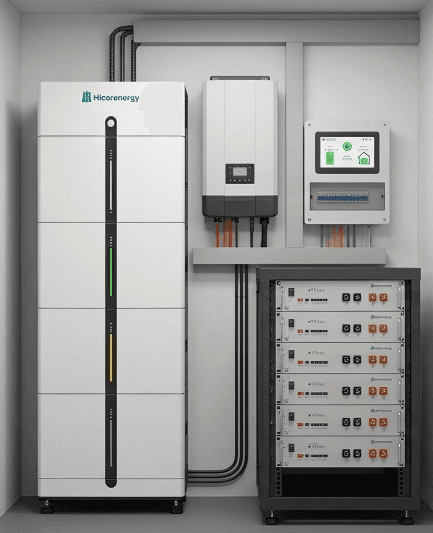
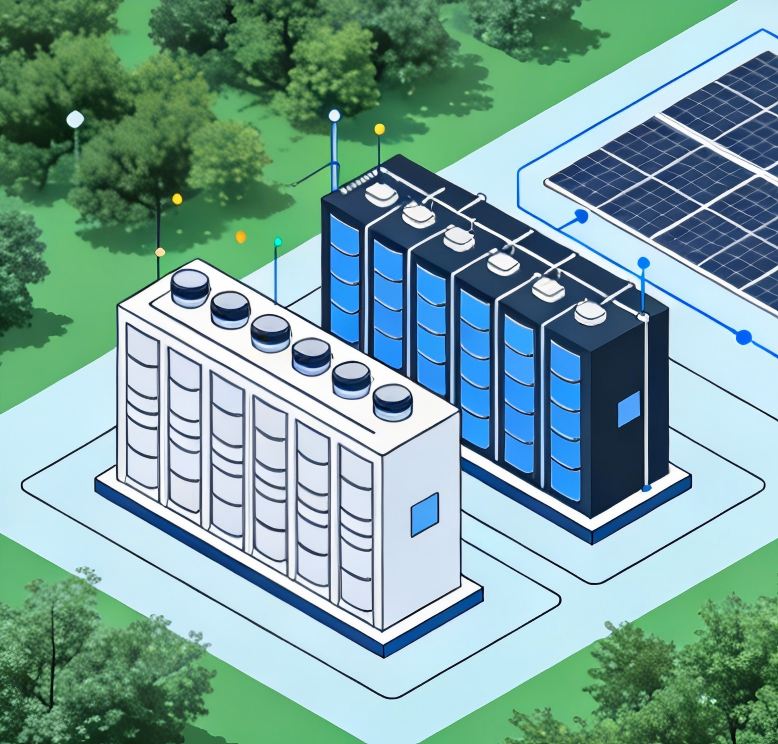
A lithium battery farm is a large-scale installation of interconnected lithium-ion battery modules designed to store and manage electrical energy. These systems typically range from several megawatt-hours to hundreds of megawatt-hours in storage capacity.
A typical battery farm includes:
-
Lithium-ion battery modules
-
Battery management systems (BMS)
-
Power conversion systems (PCS)
-
Energy management software
-
Cooling and fire protection systems
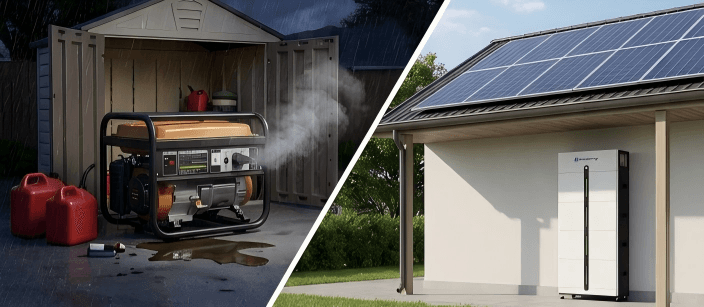
Unlike traditional backup generators that rely on fossil fuels, battery farms operate silently with zero direct emissions, making them an environmentally friendly alternative for utilities and industrial users.
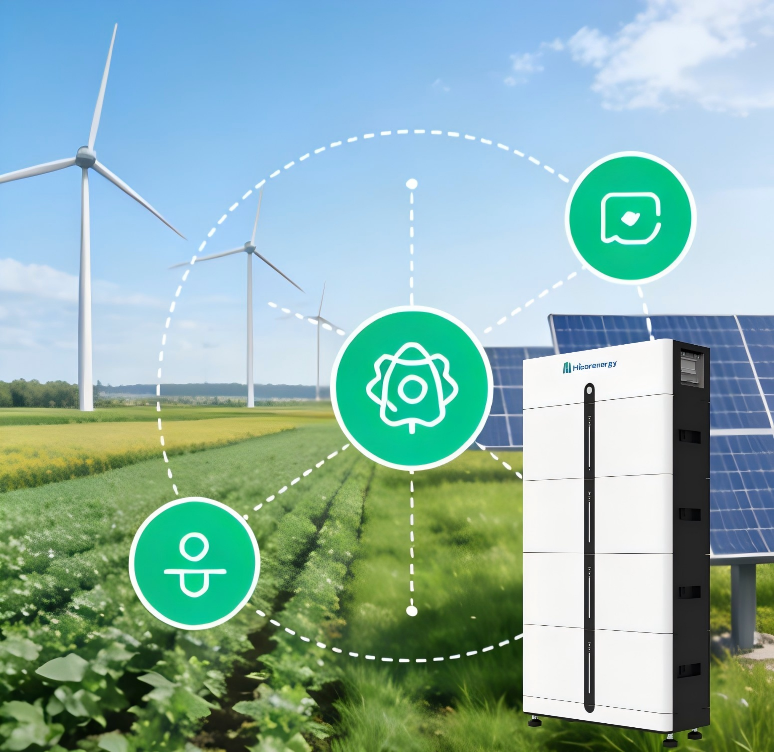
Hicorenergy offers advanced solutions for such applications. Our SI LV1 and I-BOX 48100R battery modules integrate seamlessly into larger storage systems, providing reliable performance and intelligent energy management for utility-scale projects.
How Battery Farms Store and Release Renewable Energy
A primary function of lithium battery farms is managing renewable energy fluctuations. Solar panels generate during daylight; wind turbines depend on weather conditions. Without storage, excess electricity goes to waste during peak generation.
Battery farms solve this through energy shifting:
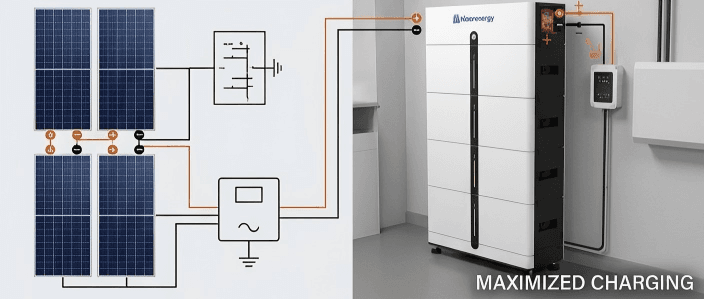
When production exceeds demand: Excess electricity charges the battery farm, with advanced software optimizing charging efficiency.
When demand increases: Stored energy releases to the grid, converted from DC to AC power for distribution to homes, businesses, and industrial facilities.
This process stabilizes power supply while maximizing renewable energy utilization.
The Shift Toward Hybrid Technology
The industry is moving toward hybrid approaches that combine multiple storage technologies. Different battery chemistries offer unique strengths:
-
Lithium-ion batteries provide high energy density and rapid response
-
Flow batteries enable longer-duration storage
-
Solid-state technologies promise improved safety and efficiency
Hicorenergy's SI Station186 and SI Station230 exemplify this hybrid-ready approach. These integrated storage solutions combine high-performance battery systems with sophisticated management platforms, delivering optimal efficiency for large-scale energy projects.
By deploying hybrid battery systems, energy providers can optimize performance, reduce costs, and improve operational flexibility.
 Beyond Storage: Grid Stability and Emergency Power
Battery farms now provide essential grid support services:
-
Frequency regulation
-
Voltage stabilization
-
Peak load management
-
Black start capability for power plants
These capabilities allow utilities to maintain stability during sudden demand fluctuations. When demand spikes unexpectedly, battery systems can discharge electricity within milliseconds—far faster than traditional gas turbines or coal plants.
Battery farms also play an expanding role in emergency infrastructure. During outages or natural disasters, they provide backup power to hospitals, data centers, and critical facilities, redefining emergency power solutions worldwide.
Lifecycle Sustainability and Recycling
The environmental value of battery farms extends beyond operational emissions. Full lifecycle management—including production, operation, and recycling—determines their overall impact.
Modern recycling technologies recover valuable materials from retired lithium batteries:
-
Lithium
-
Nickel
-
Cobalt
-
Copper
-
Aluminum
These materials are reused in new batteries, significantly reducing production footprints. Many battery systems are now designed with recycling and second-life applications in mind. Retired electric vehicle batteries, for example, can be repurposed for stationary storage before final recycling.
This circular approach ensures lithium battery farms remain sustainable long-term energy solutions.
Conclusion
Lithium battery farms are transforming how electricity is stored, managed, and distributed across modern energy systems. By storing excess renewable energy and releasing it when needed, these facilities stabilize power grids and maximize clean energy utilization. Their instant response to demand fluctuations makes them vital to future energy infrastructure.
Beyond storage, battery farms support grid stability, enable emergency power systems, and contribute to sustainable energy lifecycles through recycling and material recovery.
As global energy demand grows, lithium battery farms will remain key to building resilient, reliable, and sustainable power networks.
Ready to explore energy storage solutions for your project?
Contact Hicorenergy today: