Choosing between a wall-mounted battery and a floor-standing battery depends on your available space, energy demand, installation conditions, and future expansion plans. This home battery storage comparison explains the advantages, limitations, installation requirements, and long-term value of both systems to help homeowners select the most suitable home battery backup solution.
Space Requirements: How Much Room Do You Really Need?
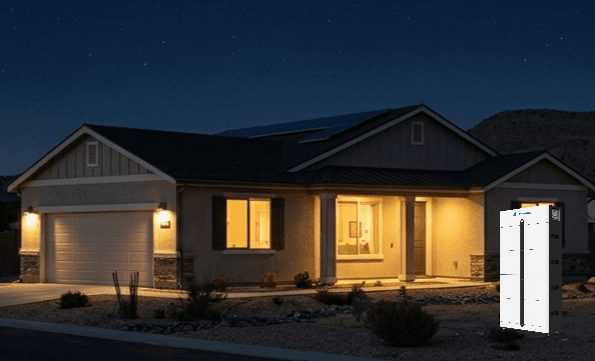
One of the first factors homeowners consider in a home battery storage comparison is available installation space. A wall-mounted battery is designed to save floor area by attaching directly to walls in garages, utility rooms, or outdoor sheltered spaces. This makes a wall-mounted battery ideal for apartments, compact homes, and locations where floor space is limited. Most modern wall-mounted battery systems have slim profiles and can even be installed vertically or horizontally depending on the wall structure.
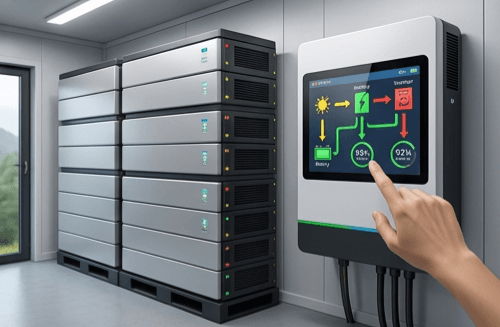
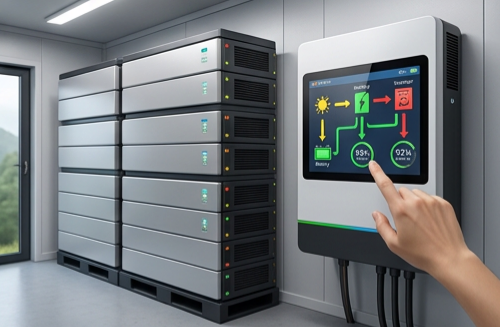
By comparison, a floor-standing battery requires more dedicated ground space but often supports larger energy capacities. Homes with utility rooms, basements, or outdoor energy cabinets may find a floor-standing battery easier to accommodate. In larger homes with high electricity consumption, a floor-standing battery can provide better heat dissipation and easier cable management.
For example, Hicorenergy’s SI LV1 system is specifically designed for limited installation environments while supporting stackable expansion up to 30.72kWh. Meanwhile, the I-BOX 48100R supports wall mount, floor-stand, or server rack installation, offering homeowners flexible deployment choices.
| Comparison Factor | Wall-Mounted Battery | Floor-Standing Battery |
|---|---|---|
| Space Usage | Saves floor area | Requires dedicated floor space |
| Best For | Apartments, small homes | Villas, large homes |
| Installation Location | Wall surfaces | Utility rooms or outdoor cabinets |
| Expansion Flexibility | Moderate | High |
| Accessibility | Medium height access | Easier maintenance access |
Capacity and Scalability: Can You Expand Later?
Capacity planning is another critical part of any home battery storage comparison. A wall-mounted battery is often chosen for moderate daily electricity consumption and home battery backup during outages. However, some advanced systems now allow multiple wall-mounted battery units to connect in parallel for increased storage capacity.
Floor-standing battery systems generally offer higher scalability and are preferred for households planning future solar expansion, EV charging, or whole-home backup applications. Hicorenergy’s I-BOX 48100R supports up to 96 parallel units and can expand to 491.52kWh, making it suitable for both residential and light commercial applications.
Homeowners who expect rising electricity demand should carefully evaluate whether a wall-mounted battery alone can support future energy needs. The right battery storage solution should balance current affordability with long-term flexibility.
Installation Complexity: Wall Reinforcement vs. Ready-to-Place
Installation complexity often becomes the deciding factor between a wall-mounted battery and a floor-standing battery. A wall-mounted battery requires strong structural support because lithium battery systems can weigh over 50kg depending on capacity. Installers may need to reinforce walls before mounting the battery safely. Concrete and brick walls are usually preferred, while lightweight partition walls may require additional framing.
Another important consideration is ventilation and heat management. Since a wall-mounted battery is elevated, airflow around the unit is often better, helping improve thermal performance. However, improper installation height can complicate maintenance access or increase safety risks during servicing.
A floor-standing battery simplifies many installation challenges because it can be placed directly on the ground or inside a dedicated enclosure. This reduces wall reinforcement costs and shortens installation time. For larger energy storage systems, floor-standing designs also make wiring and maintenance easier.
Hicorenergy’s SI LV1 system demonstrates how modern battery storage technology reduces installation complexity. The plug-and-play design allows installation within approximately 15 minutes while eliminating complicated hand wiring. Its IP55-rated enclosure also supports both indoor and outdoor applications, providing flexibility for different residential environments.
The following chart shows average installation considerations for residential battery storage systems:
| Installation Factor | Wall-Mounted Battery | Floor-Standing Battery |
|---|---|---|
| Structural Support Needed | High | Low |
| Installation Time | Medium | Faster |
| Maintenance Accessibility | Moderate | Easier |
| Ventilation Efficiency | Good | Very Good |
| Suitable for Outdoor Use | Depends on enclosure | Excellent with cabinet |
In regions with unstable electricity supply, homeowners increasingly prioritize reliable home battery backup systems that can be installed quickly and maintained easily. A wall-mounted battery offers an attractive solution for urban homes, while a floor-standing battery often provides better convenience for larger backup systems.
Cost Comparison: Upfront Investment vs. Long-Term Value
Cost remains one of the most important elements in a home battery storage comparison. Generally, a wall-mounted battery may involve slightly higher installation expenses because of wall reinforcement, mounting hardware, and labor requirements. However, the smaller footprint and compact design can increase property usability, especially in urban homes where space has high value.
A floor-standing battery may reduce installation labor costs but often requires additional protective cabinets or dedicated installation areas. In high-capacity applications, floor-standing battery systems can become more economical because scaling larger energy storage setups is easier and more efficient.
Long-term operating value also matters. Modern lithium battery storage systems with LiFePO4 chemistry provide significantly longer service life than traditional lead-acid batteries. Hicorenergy’s C5° system offers more than 6000 cycles at 90% depth of discharge with over 95% round-trip efficiency. These performance characteristics reduce long-term replacement frequency and improve overall return on investment.
The table below compares estimated long-term ownership factors:
| Cost Factor | Wall-Mounted Battery | Floor-Standing Battery |
|---|---|---|
| Initial Installation Cost | Medium to High | Medium |
| Space Efficiency Value | High | Medium |
| Expansion Cost | Moderate | Lower for large systems |
| Maintenance Cost | Low | Low |
| Expected Lifespan | 10–20 Years | 10–20 Years |
For households seeking reliable home battery backup during power outages, both solutions can deliver strong performance when paired with quality battery management systems and compatible solar inverters. The final decision depends on installation environment, future scalability plans, and available budget.
Hicorenergy provides advanced battery storage solutions including the wall-mounted I-BOX 48100R, scalable SI LV1, and high-efficiency C5° systems. With global service networks and flexible installation designs, Hicorenergy supports reliable residential energy independence worldwide.
Email: info@hicorpower.com
WhatsApp: +86 181-0666-3226