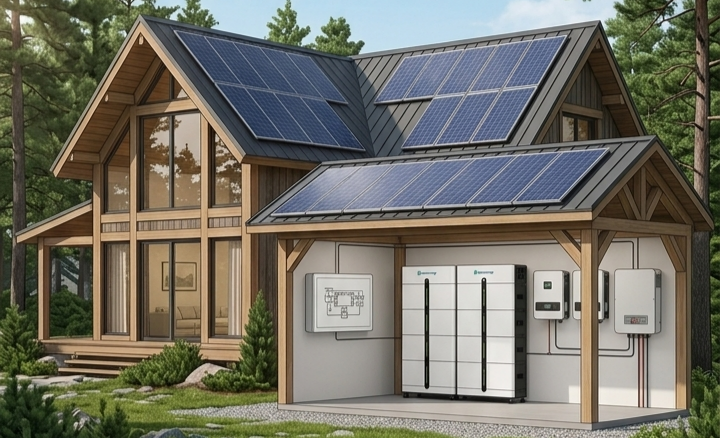
A home battery backup system automatically detects grid failure and instantly switches to stored energy, ensuring uninterrupted power supply. By combining advanced battery storage systems, inverters, and smart controls, it delivers seamless backup for essential appliances, improving energy independence and reliability during outages.
How Does a Home Battery Backup System Work When the Grid Goes Down?
A home battery backup system is designed to respond instantly when the grid fails. During normal operation, the system stores excess solar energy or grid electricity in battery storage systems. Once a power outage occurs, the system detects the disruption through an automatic transfer mechanism and disconnects from the grid to ensure safety.
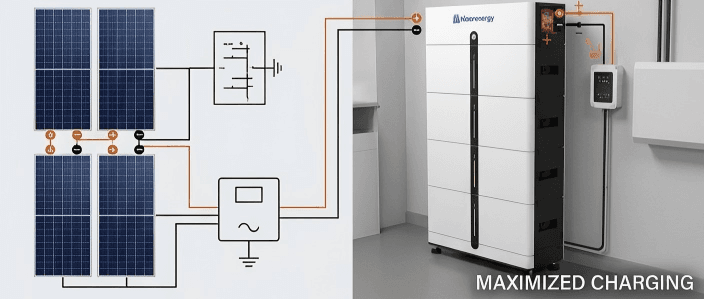
Within milliseconds, the inverter converts stored DC power into usable AC electricity, allowing the home to continue operating without noticeable interruption. This process is what defines a battery backup system during outage conditions—fast, automatic, and reliable.
In a whole house battery backup setup, critical loads such as lighting, refrigeration, and communication devices remain powered. More advanced systems can even support entire households depending on battery capacity and load management strategies.
Key Components That Enable Seamless Backup Power
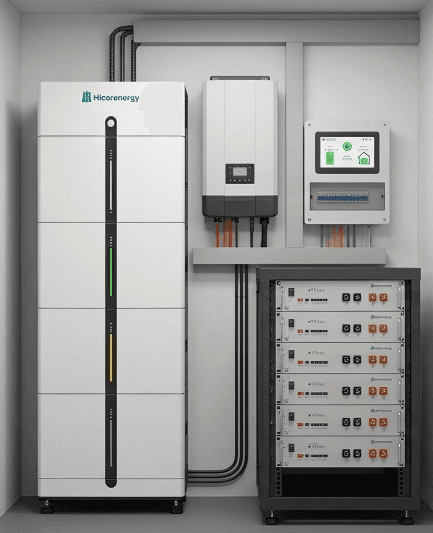
To fully understand the best home battery backup system, it is important to explore the core components that make seamless operation possible. These include lithium battery packs, hybrid inverters, battery management systems (BMS), and smart monitoring platforms.
Each component plays a vital role: batteries store energy, inverters convert it, and the BMS ensures safety and efficiency. Modern systems also feature real-time monitoring and remote control, allowing users to manage their energy consumption effectively.
With these components working together, homeowners can achieve reliable whole house battery backup and maintain energy continuity even in unstable grid environments. The following sections further explore how this translates into real-world performance and system selection.
What Appliances Can a Battery Storage System Power During a Blackout?
The capability of a home battery backup system during outage scenarios largely depends on battery capacity and system configuration. Typically, essential appliances such as lights, refrigerators, Wi-Fi routers, and medical devices are prioritized to ensure daily functionality.
In a standard setup, a 5–10 kWh battery storage system can support critical loads for several hours. For example:
| Appliance | Average Power (W) | Runtime (10 kWh system) |
|---|---|---|
| Refrigerator | 150W | 60+ hours |
| LED Lighting | 100W | 100 hours |
| Wi-Fi Router | 20W | 300+ hours |
| Television | 120W | 80 hours |
For users seeking a whole house battery backup, higher-capacity systems or modular solutions are required. Hicorenergy’s I-BOX 48100R, for instance, offers over 6000 cycles and supports scalable expansion up to 491.52 kWh, enabling extended backup durations and broader appliance coverage.
Additionally, systems like the SI LV1 provide high output power and flexible stacking, making them suitable for powering heavier loads such as air conditioners or water pumps when properly configured.
Ultimately, the best home battery backup system is one that balances capacity, load priority, and efficiency to meet specific household needs.
How to Choose the Right Energy Storage System for Your Home
Selecting the right home battery backup involves evaluating several key factors, including energy consumption, outage frequency, and system scalability. A properly sized battery storage system ensures that essential appliances remain operational without overspending on unnecessary capacity.
First, users should assess their daily energy usage and identify critical loads. This helps determine the minimum battery capacity required for a reliable battery backup system during outage conditions.
Second, system compatibility is crucial. High-quality solutions like Hicorenergy’s SI LV1 are designed with plug-and-play installation and wide inverter compatibility, simplifying integration into existing solar energy setups.
Third, scalability should be considered. Modular battery storage systems allow users to expand capacity as energy needs grow, making them ideal for both residential and small commercial applications.
Finally, safety and durability are essential. Advanced lithium iron phosphate (LiFePO4) batteries provide longer lifespan, higher efficiency, and enhanced safety compared to traditional alternatives.
By carefully considering these factors, users can select the best home battery backup system that delivers reliable performance, cost efficiency, and long-term value.
About Hicorenergy
Hicorenergy provides advanced home battery backup and battery storage systems with high efficiency, long lifespan, and flexible scalability. Solutions like I-BOX 48100R and SI LV1 ensure reliable power supply, seamless backup, and smart energy management for global users.
Contact Us
For more information about whole house battery backup and customized solutions:
Email: info@hicorpower.com
WhatsApp: +86 181-0666-3226