 Blackout Anxiety is rising as grid instability increases, making a home battery backup system essential for modern households. This guide explains how to prepare for a power outage, choose the right system, calculate battery size, and evaluate costs and ROI to ensure reliable, long-lasting home energy security.
Power Outage Preparedness: Building Your Foundational Emergency Kit
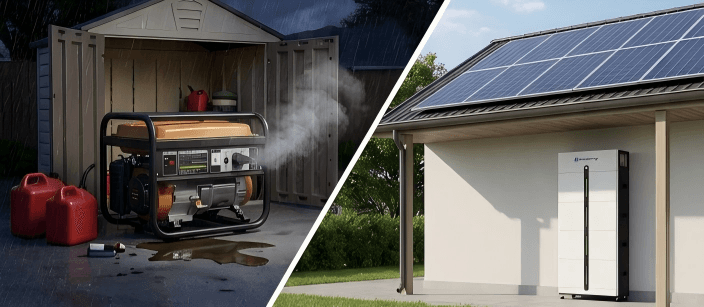
Preparing for outages starts with a solid emergency foundation before installing a home battery backup system. Homeowners should secure essential supplies such as backup lighting, portable chargers, food reserves, and communication devices. However, traditional kits only provide short-term relief and do not address prolonged outages.
To truly reduce Blackout Anxiety, energy resilience must be integrated into the home. This means identifying critical loads such as refrigerators, medical devices, lighting, and internet routers. Understanding how to prepare for a power outage also involves estimating how long these devices must run. While emergency kits may last 24–48 hours, a properly designed home battery backup system can extend power availability significantly, offering a more sustainable and reliable solution.
How to Choose the Right Backup System for Your Home
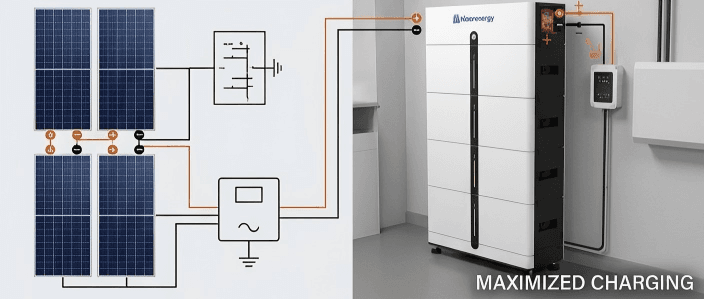
Selecting the right home battery backup system requires balancing power capacity, flexibility, and cost. Homeowners must consider hybrid inverter sizing, system scalability, and compatibility with solar panels. A well-designed system not only provides backup power but also optimizes daily energy use, encouraging users to explore advanced solutions that go beyond basic outage protection.
How to Calculate the Right Battery Size
Accurate sizing is the foundation of an effective home battery backup system. To determine how many kWh are needed, homeowners must calculate daily energy consumption and identify critical loads during outages. A common question is: how long can a home battery last? The answer depends on both battery capacity and energy usage patterns.
For example:
-
Essential load: 5 kWh/day
-
Desired backup time: 2 days
-
Required battery size: 10 kWh ÷ 0.9 (usable capacity) ≈ 11.1 kWh
Below is a practical reference chart for home battery backup system sizing:
| Essential Load (kWh/day) | Backup Duration | Recommended Battery Size (kWh) |
|---|---|---|
| 5 | 1 day | 5.5–6 |
| 10 | 1 day | 11–12 |
| 10 | 2 days | 22–24 |
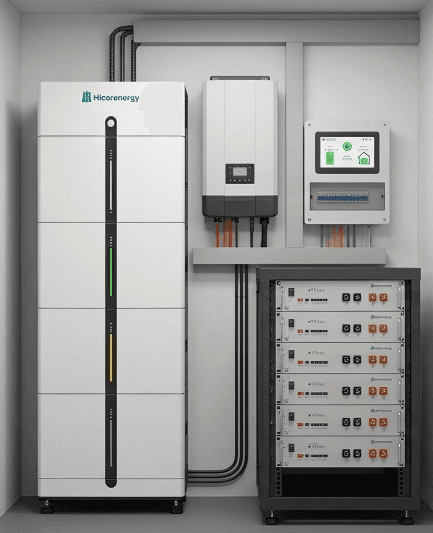
Advanced systems like Hicorenergy’s I-BOX 48100R offer ≥6000 cycles and over 95% efficiency, ensuring long-term reliability. Its scalable design allows homeowners to expand capacity as energy needs grow, making it ideal for flexible home battery backup system configurations.
Proper hybrid inverter sizing is equally important. If the inverter cannot support peak loads, even a large battery will fail to deliver expected performance. Studies show that optimized sizing improves system efficiency by up to 25%, significantly reducing Blackout Anxiety.
Understanding 2026 Battery Costs, Tax Credits, and ROI
Cost considerations are a major factor when investing in a home battery backup system. In 2026, lithium battery prices are expected to stabilize between $120–$180 per kWh, depending on scale and technology. While initial costs may seem high, tax incentives and energy savings significantly improve ROI.
For example, many regions offer tax credits covering 20–30% of installation costs, reducing upfront investment. Additionally, integrating solar panels with a home battery backup system allows homeowners to save on electricity bills through peak shaving and time-of-use optimization.
Hicorenergy’s SI LV1 modular system provides a cost-effective solution with scalable capacity (10.24–30.72 kWh per stack) and fast installation. Its plug-and-play design reduces labor costs while maintaining high performance, making it an attractive option for homeowners seeking long-term value.
Data suggests that a well-designed home battery backup system can achieve ROI within 5–8 years, depending on usage patterns and local energy prices. Beyond financial returns, the ability to maintain power during outages delivers unmatched peace of mind, effectively eliminating Blackout Anxiety.
Hicorenergy offers reliable, scalable lithium battery solutions with long lifespan, high efficiency, and flexible installation, making each home battery backup system a dependable solution for energy independence.
For more information, please contact:
Email: info@hicorpower.com
WhatsApp: +86 181-0666-3226