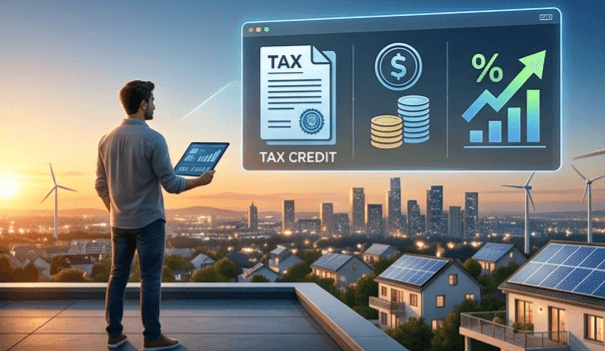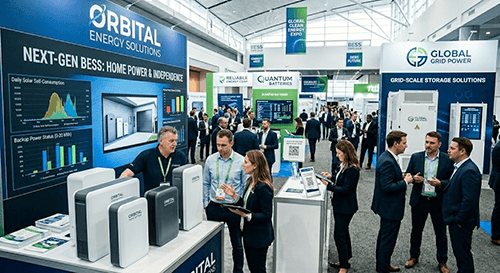
Energy storage in Australia is supported by government programs, rebates, and financing options that reduce upfront costs and accelerate adoption. Homeowners and businesses can benefit from federal schemes, state-level rebates, and clean energy initiatives, making energy storage systems more affordable while encouraging a shift toward sustainable and reliable power solutions.
Federal Government Incentives for Residential Energy Storage Systems
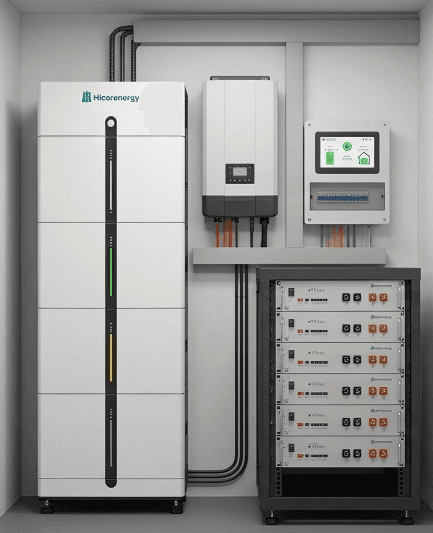
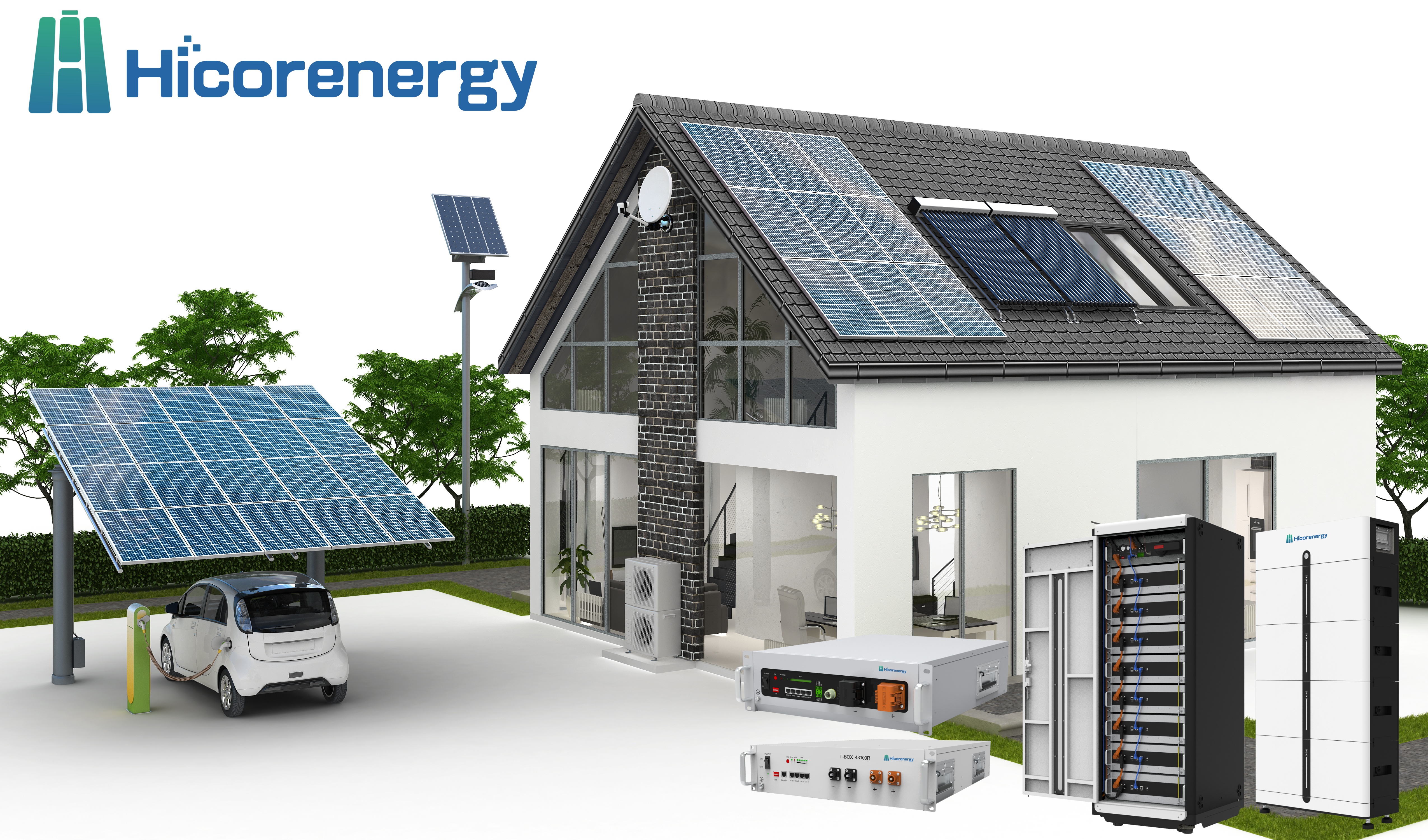
The Australian federal government provides several frameworks that indirectly support residential energy storage adoption. While there is no single national subsidy specifically for standalone batteries, households that install energy storage systems alongside eligible solar PV setups can access benefits under programs like the Small-Scale Renewable Energy Scheme (SRES). This scheme provides Small-Scale Technology Certificates (STCs), which reduce the upfront cost of renewable energy systems, including those paired with storage. Additionally, financing support through organizations such as the Clean Energy Finance Corporation (CEFC) complements federal policies, allowing homeowners to secure competitive loans for solar-plus-storage projects. Companies such as Hicorenergy offer advanced lithium-ion storage systems like the I-BOX 48100R and Si LV1, which integrate seamlessly with solar setups, making them compatible with Australia’s energy transition incentives.
State-Specific Rebates and Subsidies for Energy Storage in Australia
Each Australian state and territory offers its own programs to encourage the uptake of energy storage. For example, Victoria’s Solar Homes Program provides rebates for battery installations, while South Australia’s Home Battery Scheme has been a pioneer in driving household adoption. Queensland and New South Wales have also introduced pilot programs and loans to support energy storage in Australia.
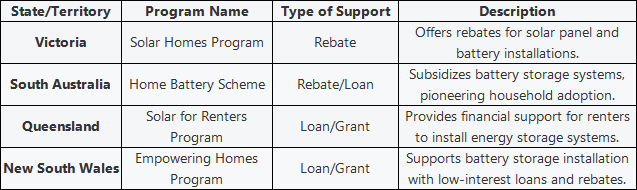
How the Small-Scale Renewable Energy Scheme (SRES) Benefits Energy Storage Installations
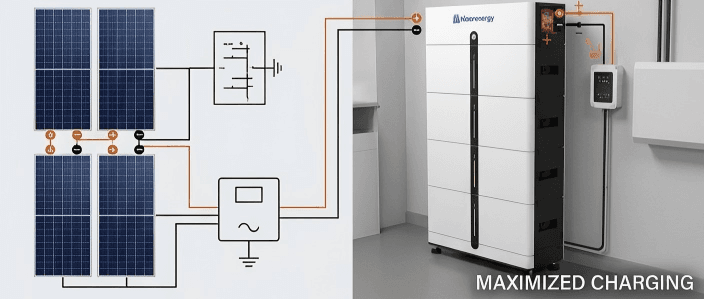
The SRES is a cornerstone of renewable energy policy in Australia and plays a significant role in reducing the cost of solar-plus-storage systems. By generating Small-Scale Technology Certificates (STCs) based on the amount of renewable energy a system produces or displaces, homeowners can sell these certificates to electricity retailers, who are required to purchase them under federal law. This creates a financial benefit that lowers upfront costs. Energy storage in Australia becomes more attractive when paired with solar under SRES, as batteries allow households to maximize solar self-consumption and reduce grid reliance. Hicorenergy’s scalable residential systems, designed for compatibility with major inverters, ensure households can take full advantage of these federal incentives.
The Role of Clean Energy Finance Corporation (CEFC) in Energy Storage Funding
The Clean Energy Finance Corporation (CEFC) plays a crucial role in funding renewable and storage projects across Australia. Through its partnerships with banks and financial institutions, CEFC provides households and businesses with access to low-interest loans for eligible solar and energy storage installations. This reduces financial barriers for adopting advanced technologies and encourages sustainable investment. For example, Hicorenergy’s C5° and Si LV1 solutions are ideal for Australian households seeking financing under CEFC-backed programs. These systems combine long lifespans, high safety standards, and remote monitoring capabilities, aligning with CEFC’s mission to promote durable and efficient clean energy assets. By using such technologies, households can achieve both financial savings and long-term energy independence.
How to Apply for Energy Storage Subsidies in Australia: A Step-by-Step Guide
Applying for energy storage subsidies in Australia involves a structured process. First, homeowners should research available federal and state-level programs to determine eligibility. Next, they must select a Clean Energy Council (CEC)-approved installer, as this is often a requirement for accessing rebates and certificates. The installer will typically assist with applications, ensuring that the battery system meets technical standards and regulatory compliance. For federal incentives like the SRES, the creation and trading of STCs are usually managed by the installer, reducing complexity for homeowners. For state programs, applicants may need to submit proof of residence, system specifications, and installation invoices. To maximize the value of these subsidies, households should consider advanced systems such as Hicorenergy’s I-BOX 48100R or Si LV1, which are designed for efficiency, safety, and long-term operation.

Summary
Energy storage in Australia is supported through federal schemes, state rebates, and financing initiatives. Hicorenergy’s advanced solutions provide households with reliable, efficient, and subsidy-compatible storage options for a sustainable energy future.