Choosing between solar panels series and solar panels parallel connections directly impacts charging efficiency, system stability, and overall performance of solar battery storage. This article explains their differences, ideal use cases, and how to select the right configuration for reliable solar energy utilization in residential and commercial battery systems.
Series vs Parallel Solar Panels: What's the Difference for Battery Charging?
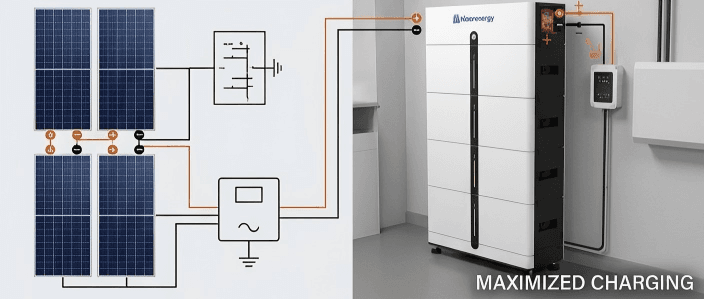
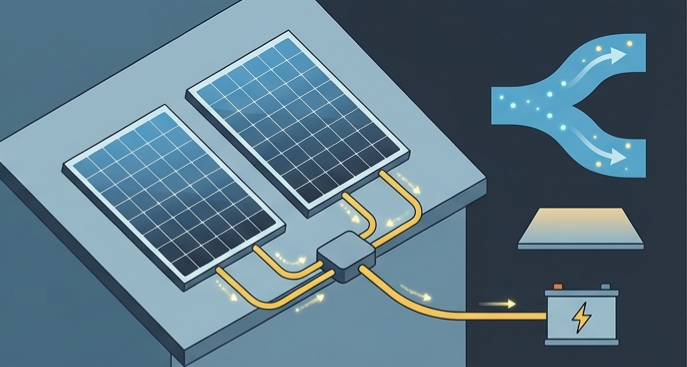
When discussing how to wire solar panels for battery storage, understanding the difference between solar panels series and solar panels parallel is essential. In a series connection, voltages add up while current remains constant. For example, connecting four 12V panels in series produces 48V output, which is ideal for systems requiring higher voltage input.
In contrast, solar panels parallel maintain the same voltage but increase current. Four 12V panels in parallel still output 12V, but the current multiplies, improving performance under partial shading conditions.
From a technical perspective:
| Connection Type | Voltage Output | Current Output | Shading Impact | Efficiency |
|---|---|---|---|---|
| Series | High | Constant | High impact | Higher in stable sunlight |
| Parallel | Constant | High | Lower impact | Better in variable conditions |
Both methods influence how efficiently solar energy is stored in solar battery storage systems, especially when paired with lithium batteries.
When to Wire Solar Panels in Series for Battery Storage Systems
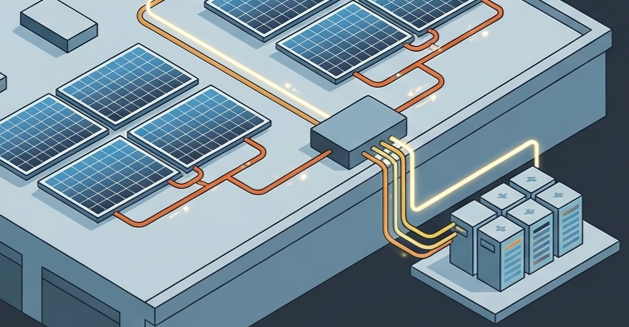
Understanding when to use solar panels series is critical for optimizing system design. Series wiring is typically preferred in systems where higher voltage is required to reduce energy loss over long cable distances. This configuration minimizes current, which reduces heat loss and improves transmission efficiency.
For battery storage systems, especially those using high-voltage inverters, series connections allow faster and more efficient charging. This is particularly useful in large-scale residential or commercial solar energy setups.
However, series wiring comes with a trade-off: if one panel underperforms due to shading or dirt, the entire string’s output is affected. This makes system design and panel placement extremely important.
For users planning long-distance installations or high-voltage solar battery storage, continuing to explore the right configuration becomes essential.
When to Wire Solar Panels in Parallel for Battery Storage Systems
Solar panels parallel are more suitable in environments where shading, dust, or uneven sunlight exposure is common. Since each panel operates independently in terms of current contribution, the system remains stable even if one panel underperforms.
This configuration is particularly beneficial for residential solar battery storage systems installed in urban or partially shaded environments. Parallel wiring ensures consistent voltage, which is ideal for low-voltage battery systems and simplifies compatibility with charge controllers.
Additionally, parallel systems are easier to expand. Users can add more panels without significantly altering system voltage, making it a flexible option for growing energy needs.
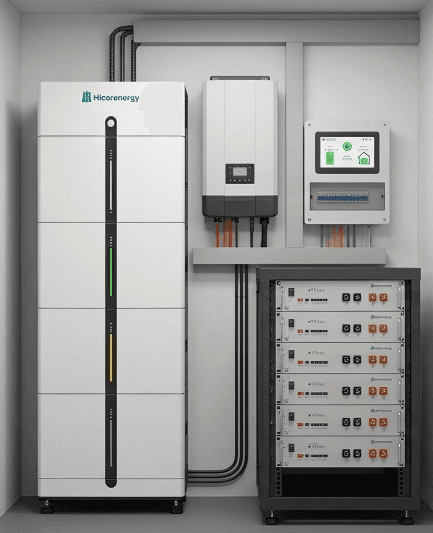
For example, Hicorenergy’s residential solutions such as the I-BOX 48100R are designed with high compatibility, allowing seamless integration with various solar panel configurations. With over 95% round-trip efficiency and more than 6000 cycles, such systems benefit from stable input conditions often provided by parallel wiring.
How to Choose the Right Configuration for Your Battery Storage
Selecting between solar panels series and solar panels parallel depends on several factors, including system size, environment, and battery specifications.
-
System Voltage Requirements
High-voltage systems generally benefit from series connections, while low-voltage systems align better with parallel configurations. -
Environmental Conditions
If shading is unavoidable, solar panels parallel provide better performance stability. -
Cable Distance and Efficiency
Series connections reduce current and minimize transmission losses over long distances. -
Battery Compatibility
Modern lithium-based solar battery storage systems, such as Hicorenergy’s Si LV1, support flexible configurations. With plug-and-play design and scalable capacity up to 122.88 kWh, it adapts easily to both series and parallel inputs. -
Future Scalability
Parallel wiring allows easier expansion, which is ideal for users planning to scale their solar energy systems over time.
In practical applications, hybrid configurations combining both series and parallel are often used to balance voltage and current, ensuring optimal charging performance and system resilience.
About Hicorenergy
Hicorenergy provides advanced solar battery storage solutions with high efficiency, safety, and scalability. Products like I-BOX 48100R and Si LV1 deliver long cycle life, flexible installation, and reliable performance for global solar energy applications.
Contact Us
For more information about how to wire solar panels for battery storage or to explore customized solutions:
Email: info@hicorpower.com
WhatsApp: +86 181-0666-3226