 Wall Mount Home Battery safety is one of the most common concerns for homeowners considering a battery backup for house use. This article explains key safety standards, fire and overheating risks, indoor installation concerns, and modern protection technologies, helping readers understand whether a lithium home battery system is a safe and reliable choice in 2026.
What Are the Primary Safety Standards for Wall Mount Batteries?
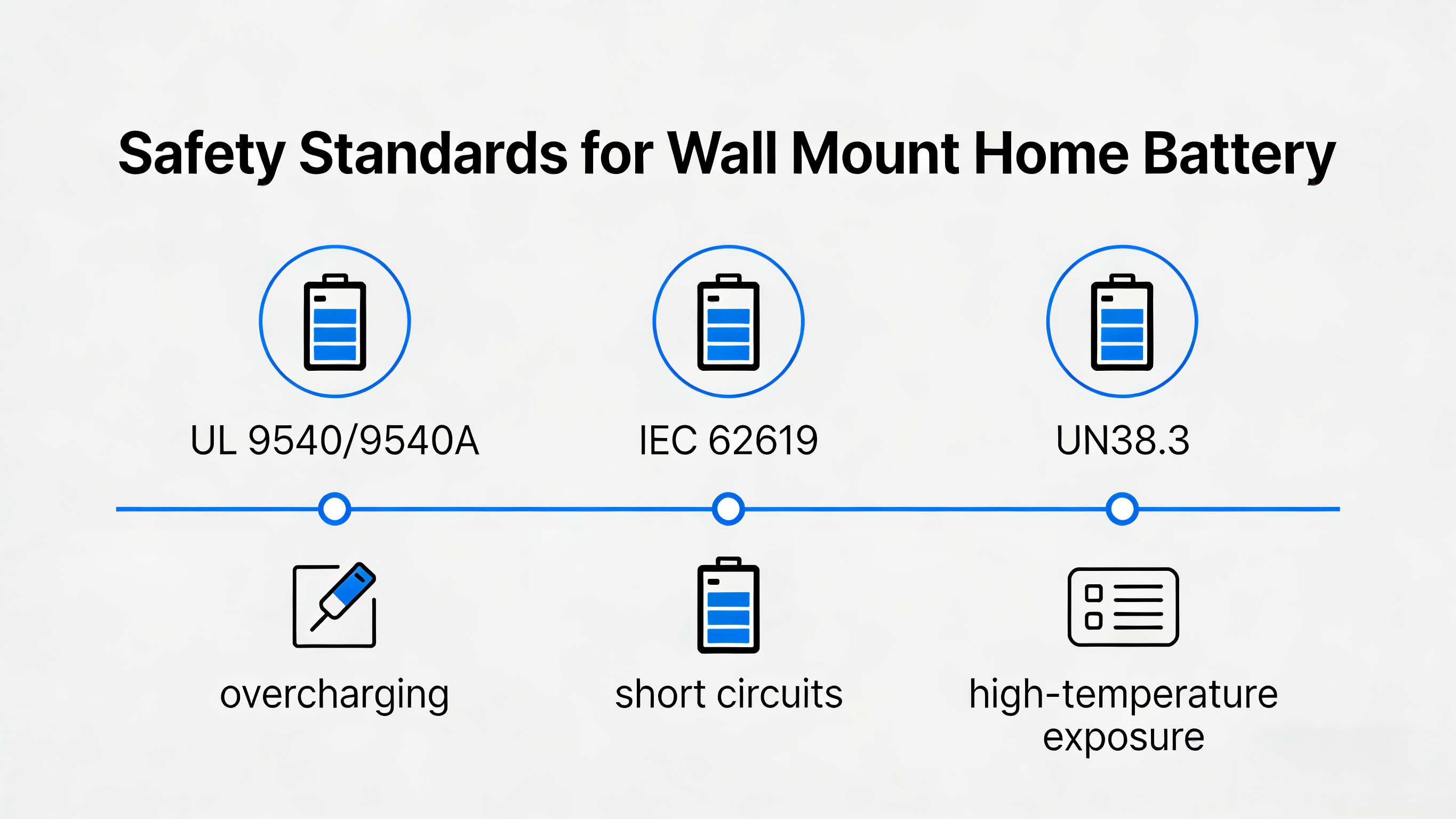
Safety standards form the foundation of any reliable Wall Mount Home Battery. In global markets, reputable manufacturers design systems to comply with standards such as UL 9540/9540A, IEC 62619, and UN38.3. These certifications evaluate thermal runaway behavior, electrical safety, mechanical strength, and fire propagation risks. In practical terms, this means a certified lithium home battery system has undergone extreme testing scenarios, including overcharging, short circuits, and high-temperature exposure.
Battery chemistry also plays a major role. Most of the best home battery 2026 solutions now use lithium iron phosphate (LFP), which is significantly more thermally stable than older lithium-ion chemistries. Integrated Battery Management Systems (BMS) further monitor voltage, current, and temperature in real time. Together, these standards and technologies ensure that a Wall Mount Home Battery meets the same safety expectations as other essential home electrical systems, while supporting long-term reliability and predictable home battery cost performance.
Can a Wall Mount Battery Overheat or Cause a Fire?
Many homeowners worry that a Wall Mount Home Battery could overheat or cause a fire, especially when used daily. While no electrical device is entirely risk-free, modern systems are engineered to minimize these concerns. Advanced thermal management, multi-layer protection logic, and fire-resistant enclosures significantly reduce the likelihood of overheating. In fact, industry data shows that certified LFP-based battery backup for house applications has a lower incident rate than many traditional home appliances.
Understanding how these protections work—and how different designs compare—helps homeowners evaluate which Wall Mount Home Battery truly qualifies as the best home battery backup for long-term residential use. This leads directly to the next question: where and how these systems can be safely installed.
Is It Safe to Install a Wall-Mounted Battery Indoors?
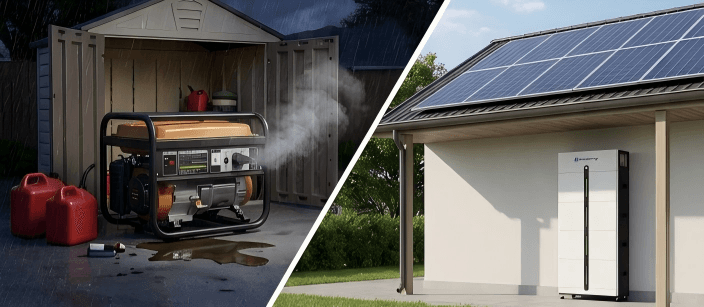
Yes, installing a Wall Mount Home Battery indoors is generally safe when the system is properly certified and installed according to manufacturer guidelines. Indoor installations are common in garages, utility rooms, and basements, especially where climate control improves battery lifespan. LFP-based lithium home battery systems are particularly suitable for indoor use because they have higher thermal stability and lower fire risk.
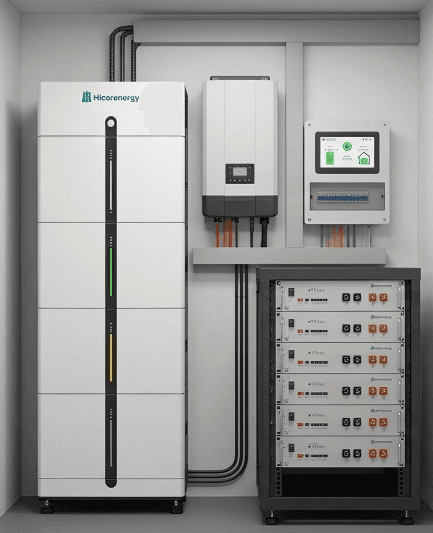
Products such as Hicorenergy’s I-BOX 48100R are designed with compact enclosures, reinforced casing, and comprehensive BMS protection, making them suitable for both indoor and outdoor installations. Proper clearance, ventilation, and professional installation are critical factors. When these conditions are met, a Wall Mount Home Battery can safely provide daily energy storage, emergency battery backup for house needs, and long-term energy independence without compromising household safety.
How Do Modern Batteries Prevent Electrical Hazards?
Electrical hazards such as short circuits, overcurrent, or insulation failure are addressed through layered protection in modern Wall Mount Home Battery designs. At the core is the BMS, which continuously monitors cell voltage balance, charge and discharge currents, and operating temperature. If abnormal conditions are detected, the system automatically isolates affected circuits.
Additionally, leading systems integrate DC breakers, fuses, and contactors to provide hardware-level protection. Hicorenergy’s SI LV1, for example, incorporates an integrated DC breaker and modular LFP battery architecture, reducing fault propagation risks. These features ensure that a lithium home battery system behaves predictably under stress, protecting both the home’s electrical network and connected appliances. This level of protection is now a baseline expectation for the best home battery 2026 market.
Final Verdict: Balancing Safety with Home Energy Independence
From a practical perspective, a modern Wall Mount Home Battery is a safe and mature technology when selected from a reputable manufacturer. Certified systems with LFP chemistry, intelligent BMS, and proper installation offer a reliable balance between safety and performance. While home battery cost remains an important factor, prioritizing certified safety features ensures long-term value. For homeowners seeking the best home battery backup, safety and energy independence are no longer opposing goals but complementary outcomes of good system design.
Hicorenergy Wall Mount Home Battery Solutions
Hicorenergy provides Wall Mount Home Battery solutions such as the I-BOX 48100R and SI LV1, combining LFP safety, modular scalability, and global certifications. Designed for reliable battery backup for house use, these systems support long service life and flexible installation across residential scenarios.
For product details and partnership support:
Email: info@hicorpower.com
WhatsApp: +86 181-0666-3226