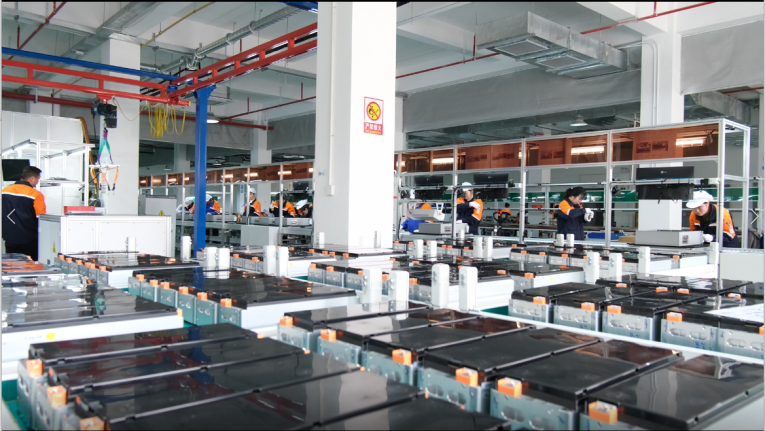
 As global electrification accelerates, lithium-ion batteries face growing pressure from cost, safety, and resource constraints. This article explores what comes next in ultra-efficient energy storage—from solid-state designs to sodium-ion and flow batteries—examining how emerging technologies could reshape residential, commercial, and grid-scale power systems worldwide.
1.Solid-State Batteries: The Path to Safer, Denser Power
Solid-state batteries are widely regarded as the most promising successor to conventional lithium-ion technology. By replacing flammable liquid electrolytes with solid materials, these batteries significantly enhance safety while enabling higher energy density. This structural shift reduces the risk of leakage and thermal runaway, two major concerns in current lithium-ion systems. In addition, solid electrolytes allow the use of lithium metal anodes, which can dramatically increase storage capacity per unit volume.
From a performance perspective, solid-state batteries also show potential for longer cycle life and improved stability across a wider temperature range. These advantages are especially relevant for residential and commercial energy storage applications that demand long-term reliability and minimal maintenance. However, large-scale commercialization remains challenging due to manufacturing complexity and material costs. Despite these hurdles, ongoing investment and rapid progress suggest that solid-state batteries may become a viable mainstream solution in the coming decade.
2.Lithium-Sulfur and Lithium-Air: The Quest for Maximum Energy Density
While solid-state batteries prioritize safety and durability, lithium-sulfur and lithium-air technologies focus on pushing theoretical energy density to new limits. These chemistries promise significantly lighter and more compact storage, which could transform electric mobility and long-duration energy storage. Yet, issues such as short cycle life, low efficiency, and sensitivity to environmental conditions still hinder commercial deployment. Understanding these trade-offs helps clarify why alternative chemistries continue to coexist and evolve rather than replace lithium-ion overnight.
3.Sodium-Ion and Beyond: Abundant Materials for Sustainable Storage
Sodium-ion batteries have gained renewed attention as a sustainable and cost-effective alternative to lithium-ion systems. Unlike lithium, sodium is abundant, widely distributed, and less subject to geopolitical supply risks. This makes sodium-ion technology particularly attractive for large-scale stationary energy storage, where cost and material availability often outweigh the need for maximum energy density.
Technologically, sodium-ion batteries share many similarities with lithium-ion systems, allowing manufacturers to adapt existing production lines with relatively minor modifications. Although their energy density is lower, ongoing improvements in cathode materials and electrolytes are steadily narrowing the performance gap. For applications such as grid buffering, renewable energy integration, and backup power, sodium-ion batteries offer a compelling balance between performance, safety, and sustainability. As energy systems increasingly prioritize resilience and environmental responsibility, sodium-based chemistries are likely to play a growing role.
4.Redox Flow Batteries: Scalable Architecture for Stationary Grid Storage
Redox flow batteries represent a fundamentally different approach to energy storage, emphasizing scalability and longevity over compactness. In these systems, energy is stored in liquid electrolytes contained in external tanks, while power output is determined by the size of the cell stack. This decoupling of energy and power allows for highly flexible system design, making flow batteries ideal for large, stationary applications.
One of their key advantages is an exceptionally long cycle life, often exceeding tens of thousands of cycles with minimal degradation. They also offer inherent safety benefits, as most flow battery chemistries are non-flammable. While lower energy density and higher upfront costs limit their use in residential settings, redox flow batteries are well suited for grid-scale energy storage, renewable smoothing, and industrial peak shaving. As grids become more decentralized and renewable-heavy, such scalable solutions will be increasingly valuable.
5.Hicorenergy: Reliable Energy Storage for Today’s Needs
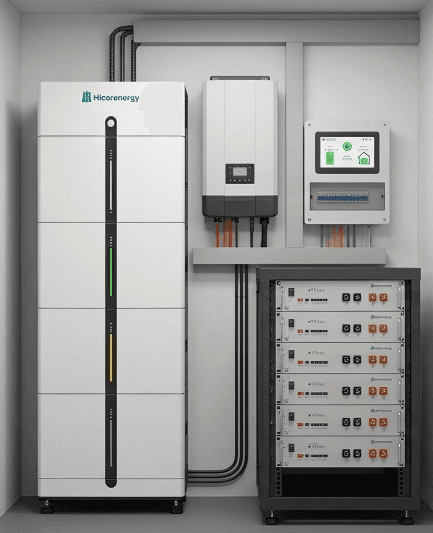
While next-generation technologies continue to mature, Hicorenergy delivers proven lithium-based residential and commercial energy storage systems today, focusing on safety, long service life, and global deployment. With advanced battery management systems and flexible configurations, its solutions address real-world energy challenges reliably and efficiently.
Contact Hicorenergy to explore your next energy storage project:
Email: info@hicorpower.com
WhatsApp: +86 181-0666-3226