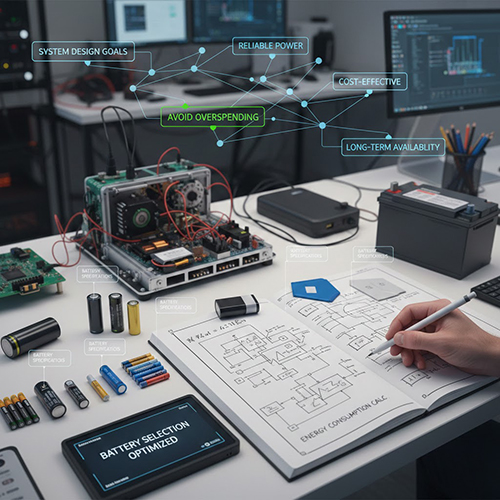
Determining the batteries needed for your project requires a clear understanding of energy consumption, battery specifications, and system design goals. By calculating usage accurately and matching it with suitable battery technologies, project owners can avoid overspending while ensuring reliable, long-term power availability.
Understanding Your Energy Requirements: Calculating Usage
Accurately defining energy demand is the first step in determining the batteries needed for your project. This process starts by listing all electrical loads, their power ratings, and daily operating hours. By multiplying power (watts) by usage time (hours), total daily energy consumption in watt-hours can be calculated. This figure forms the baseline for system sizing. For projects involving backup power or off-grid operation, it is also important to consider autonomy days and peak load requirements to ensure the battery system can handle both normal and exceptional conditions without interruption.
Battery Specifications: Key Metrics to Consider
Battery specifications directly influence how many units are required for a project. Key metrics include nominal voltage, capacity, cycle life, depth of discharge, efficiency, and operating temperature range. Lithium iron phosphate batteries, commonly used in modern energy storage systems, offer high cycle life and stable performance. According to industry practices referenced by established energy solution providers, compatibility with inverters, scalability limits, and battery management system functionality are equally critical. These parameters ensure that calculated capacity translates into usable, safe energy storage over the system’s lifespan.
Types of Batteries: Finding the Right Fit for Your Project
Different project types require different battery solutions, making battery selection a strategic decision. Residential backup systems often prioritize compact size, safety, and easy expansion, while commercial and industrial projects focus on scalability, high discharge rates, and long-term reliability. Lithium-based batteries are increasingly preferred due to their efficiency and low maintenance compared to lead-acid alternatives. Understanding application-specific needs helps narrow down options and ensures the batteries needed for your project align with both technical and economic expectations.
Estimating Battery Capacity: How to Use Amp-Hours and Watt-Hours
Battery capacity estimation is typically expressed in amp-hours (Ah) and watt-hours (Wh), and understanding the relationship between these units is essential. Watt-hours provide a direct measure of energy, calculated by multiplying battery voltage by amp-hours. For example, a 51.2V battery rated at 100Ah delivers approximately 5.12kWh of energy. By dividing total project energy demand by the usable energy per battery, the number of batteries needed for your project can be determined. It is also important to factor in depth of discharge limits and system losses, ensuring that calculated capacity reflects real-world operating conditions rather than theoretical values.
Common Mistakes to Avoid When Sizing Your Battery Bank
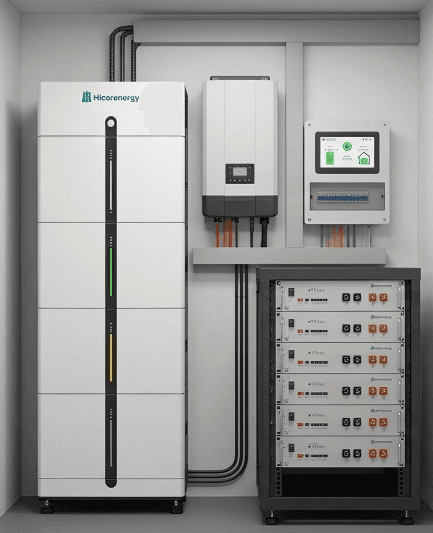
One common mistake is focusing solely on initial capacity without considering future expansion or degradation. Undersizing a system can lead to frequent deep discharges, reducing battery life, while oversizing increases upfront costs unnecessarily. Another frequent error is mixing incompatible battery models or chemistries, which can cause imbalance and reduced efficiency. Hicorenergy battery solutions are designed with modular scalability and advanced BMS protection, helping reduce these risks. Products such as the I-BOX 48100R and Si LV1 support parallel connections and standardized specifications, making it easier to size systems accurately and expand them as project requirements evolve.
Consulting Resources: Where to Find Expert Advice and Tools
Professional guidance plays a key role in determining the batteries needed for your project, especially for complex or large-scale installations. System designers, certified installers, and manufacturer resources provide calculation tools, technical documentation, and application support. Online sizing calculators and project case studies help validate assumptions, while direct consultation ensures compliance with local regulations and grid standards. Working with experienced suppliers allows project owners to optimize system design, balance cost and performance, and avoid errors that may only become apparent after installation.
In conclusion, determining the correct number of batteries depends on accurate energy calculations, careful evaluation of battery specifications, and informed system design. Hicorenergy’s scalable, high-performance battery products support reliable sizing and long-term energy storage solutions across residential and commercial projects.
For professional support in selecting the right batteries needed for your project, contact us at Email: info@hicorpower.com or WhatsApp: +86 181-0666-3226.