Choosing a solar battery is no longer just about backup power—it’s about energy independence, cost control, and future-proofing your home. This guide explains how to compare battery capacity and performance, understand different battery chemistries, evaluate true costs and savings, and know what to ask installers before buying, helping homeowners make a confident, informed decision in 202.
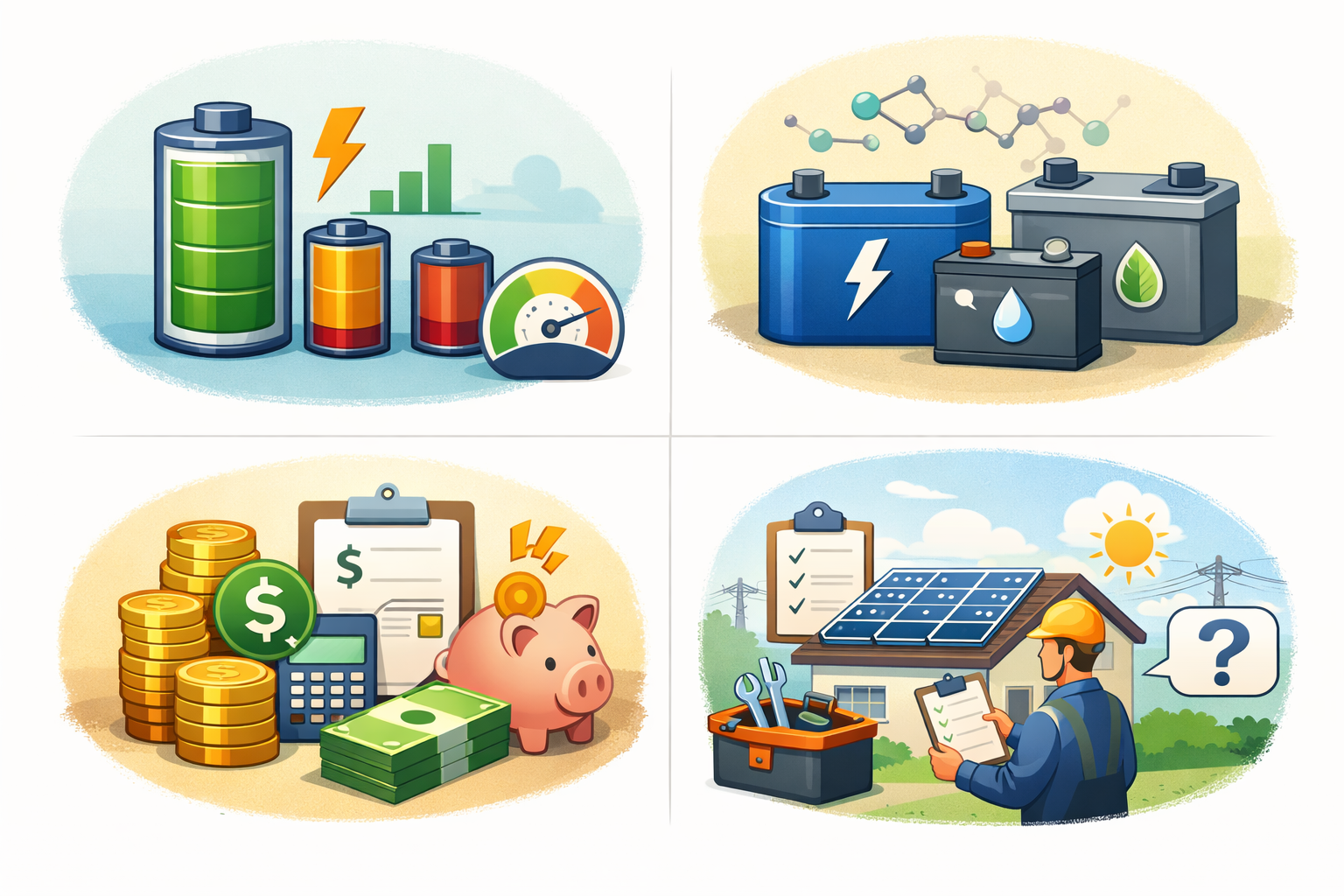 1.Key Factors to Compare: Capacity, Power, and Depth of Discharge Explained
When choosing a solar battery, three technical specifications matter most: capacity, power rating, and depth of discharge (DoD). Capacity, measured in kilowatt-hours (kWh), determines how much energy the battery can store. A larger capacity means longer backup time or more self-consumption of solar energy, but it also increases cost.
Power rating, measured in kilowatts (kW), defines how many appliances the battery can run simultaneously. A battery with high capacity but low power may last long but struggle to start energy-hungry devices like air conditioners. Depth of discharge indicates how much of the battery’s stored energy can be safely used; higher DoD means more usable energy and better value over time. Together, these factors should match your household’s energy usage, critical loads, and backup expectations rather than focusing on a single number.
2.Understanding Battery Types: Pros and Cons of Lithium-ion vs. Other Chemistries
Not all solar batteries are built the same, and understanding battery chemistry helps narrow your choices. Lithium-ion batteries dominate today’s residential market due to their high energy density, long cycle life, and compact design. They are efficient, require minimal maintenance, and integrate easily with modern solar systems.
Other chemistries, such as lead-acid or emerging alternatives, may appear cheaper upfront but often fall short in lifespan, usable capacity, and efficiency. As you read on, it becomes clear why chemistry impacts not only performance but also long-term cost, safety, and reliability—key factors that homeowners should not overlook.
3.Cost Analysis: Upfront Price, Incentives, and Calculating Your Long-Term Savings
The price of a solar battery system includes more than just the battery itself. Upfront costs typically cover the battery unit, inverter compatibility, installation labor, and permitting. While this initial investment can seem high, incentives such as tax credits, rebates, and net metering policies can significantly reduce the effective cost depending on your region.
Long-term savings come from multiple sources: reduced grid electricity purchases, protection from rising energy prices, and increased self-consumption of solar power. In areas with time-of-use pricing, batteries can store cheap or free solar energy and discharge it during expensive peak hours. When evaluated over a 10–15 year lifespan, a well-chosen battery often delivers substantial financial and energy-security returns beyond simple blackout protection.
4.The Installation Checklist: What to Ask Your Solar Provider Before You Buy
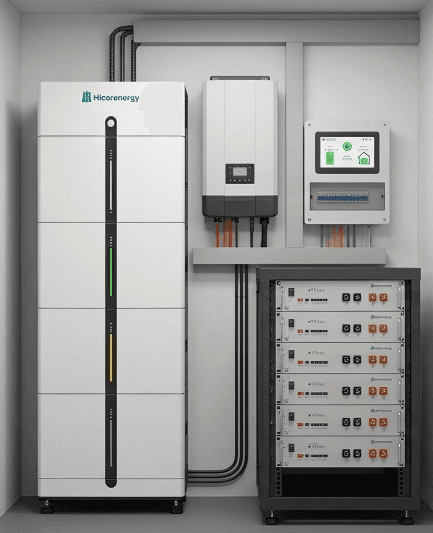
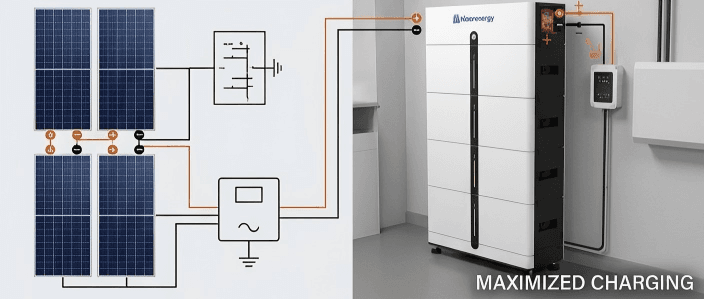
Before purchasing a solar battery, homeowners should ask the right questions to avoid costly mistakes. Start with compatibility—will the battery work with your existing solar inverter, or is an upgrade required? Next, clarify which loads can be backed up and whether critical circuits will be prioritized during outages.
Ask about system scalability: can you add more batteries later as your energy needs grow? Safety features, warranty terms, and monitoring capabilities should also be clearly explained. Finally, confirm installation timelines, local permitting requirements, and post-installation support. A reputable provider should offer transparent answers and system designs tailored to your home, not one-size-fits-all solutions.
Contact Hicorenergy to explore your next energy storage project:
Email: info@hicorpower.com
WhatsApp: +86 181-0666-3226