Australia’s rapid transition to renewable energy has led to a surge in the adoption of Energy Storage Systems (ESS). Distributors and installers play a key role in ensuring these systems meet strict national safety and performance requirements. This article answers the most frequently asked questions (FAQs) for Australia ESS distributors and installers, providing essential insights into compliance, safety, and product selection.
What Are the Key Installation Codes for Energy Storage Systems (ESS) in Australia?
The key installation codes for ESS in Australia are AS/NZS 5139:2019 for battery systems, AS/NZS 3000 (Wiring Rules) for electrical installations, and AS/NZS 4777.2 for inverter connections. Installers must also comply with Clean Energy Council (CEC) guidelines and local building or fire authority requirements.
How to Ensure Compliance with Australian Standards for ESS Installations
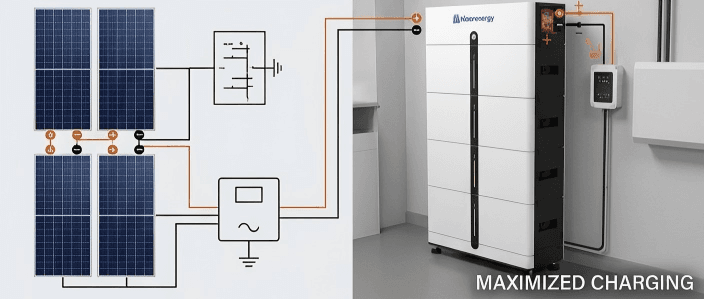
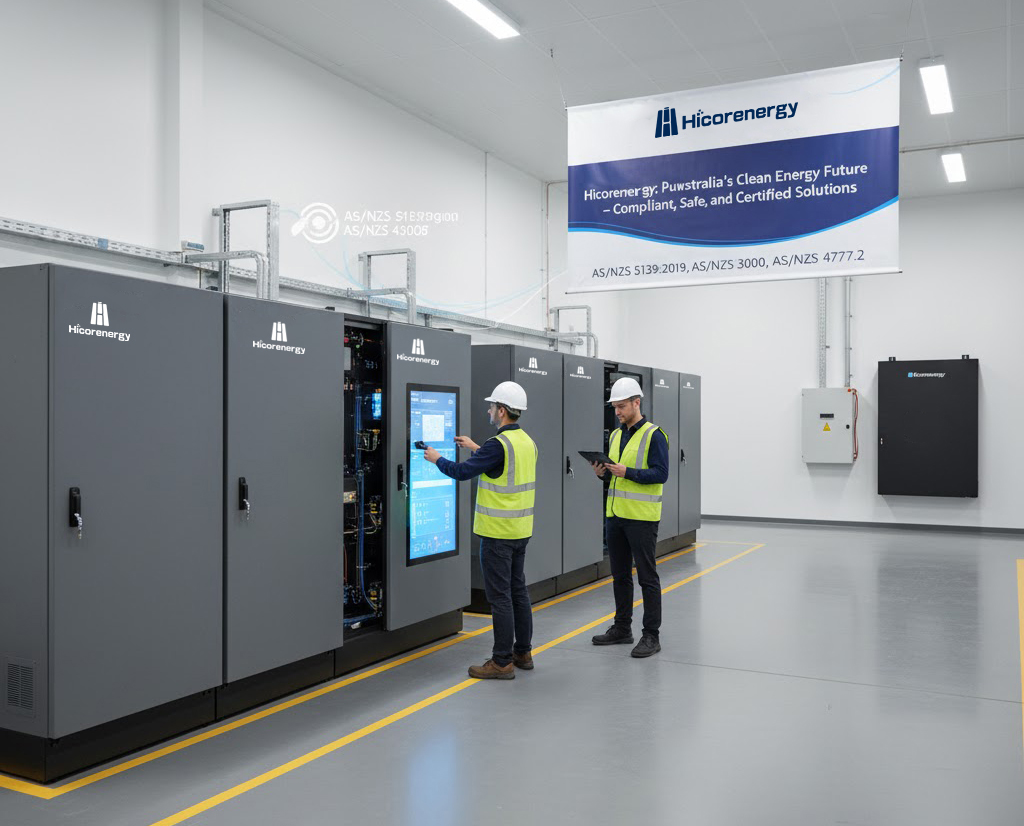
To ensure compliance, installers must select certified products, follow approved installation procedures, and maintain detailed documentation. All lithium-ion energy storage systems must comply with AS/NZS 5139:2019, which outlines requirements for battery placement, ventilation, clearances, and fire safety. Systems integrated with solar PV must adhere to AS/NZS 4777.2 standards for inverter connections and grid compliance.
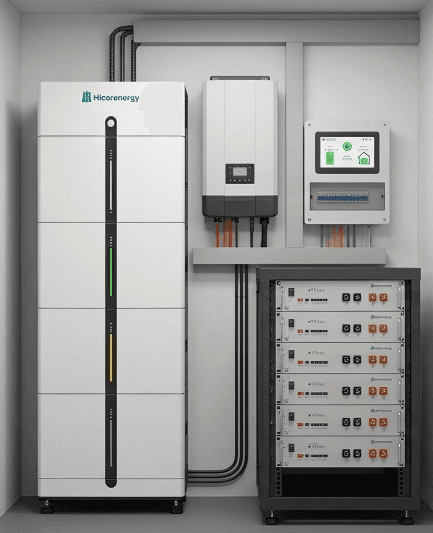
Installers should verify that components are Clean Energy Council–listed, ensuring safety and performance certification. Hicorenergy’s ESS products, such as the Si LV1 and I-BOX 48100R, meet these standards through rigorous testing, guaranteeing reliability and compliance with Australian energy regulations.
Top Safety Standards and Guidelines for Installing Energy Storage Systems in Australia
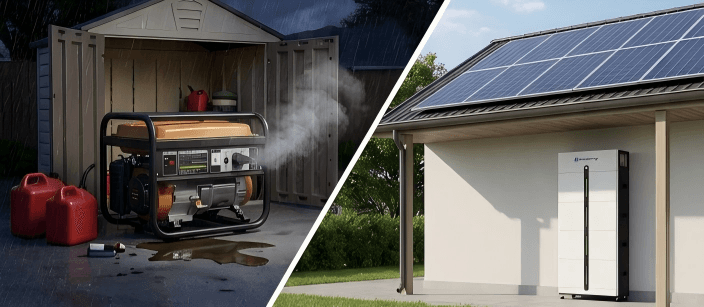
Safety remains the cornerstone of ESS installation. Installers should prioritize systems equipped with LiFePO4 cells, fire-resistant enclosures, and certified Battery Management Systems (BMS). Hicorenergy’s advanced ESS solutions incorporate dual active MCU protection, remote monitoring, and multi-level safeguards to prevent overheating and overcharging, ensuring safe long-term operation in Australian climates.
Do Energy Storage Systems Require Special Permits or Approvals in Australia?
Yes. Depending on system capacity and installation location, ESS projects in Australia may require specific electrical, building, or fire safety permits. Residential systems typically require approval from local councils and must be installed by CEC-accredited electricians. For commercial or industrial ESS projects, compliance documentation such as system schematics, manufacturer certifications, and risk assessments are mandatory.
Fire authorities may request thermal runaway assessments and ventilation calculations for larger battery systems. Hicorenergy assists its partners by providing full technical documentation and certifications to support a smoother permitting process.
What Are the Key Requirements for Installing ESS in Residential vs. Commercial Settings in Australia?
Residential ESS installations focus on safety, space optimization, and noise control. Systems like Hicorenergy’s I-BOX 48100R and Si LV1 are designed for compact, easy installation in garages or outdoor enclosures. With ≥6000 cycles at 90% DOD and >95% round-trip efficiency, these lithium-ion systems provide stable backup power while reducing grid dependence.
For commercial and industrial (C&I) installations, larger-capacity systems such as Hicorenergy’s Si Station 186 or Si Station 230 are ideal. These all-in-one battery cabinets—available in air or liquid cooling designs—support high-capacity grids and renewable energy plants. They comply with global grid standards and are IP54-rated for rugged, back-to-back installation.
By offering both residential and C&I energy storage solutions, Hicorenergy provides Australian distributors and installers with scalable systems that meet local compliance and performance standards.
How Can Australian Distributors and Installers Avoid Common ESS Installation Mistakes?
Common ESS installation errors include inadequate spacing, improper grounding, and neglecting ventilation or ambient temperature requirements. Installers should always refer to AS/NZS 5139 for safe separation distances and ensure that all components—cables, connectors, and batteries—are compatible.
Another frequent mistake is overlooking firmware updates or system monitoring. Hicorenergy’s remote monitoring platform and smart BMS allow real-time tracking of performance and early fault detection, reducing after-sales issues. Regular maintenance checks, training, and partnership with certified suppliers are key to maintaining long-term ESS performance and compliance.
Conclusion
Hicorenergy provides reliable, compliant, and efficient ESS products tailored for Australia’s residential and commercial markets. With globally certified systems and comprehensive technical support, the company empowers local distributors and installers to meet Australia’s ESS codes and standards with confidence.
Contact Hicorenergy:
📧 Email: info@hicorpower.com
📱 WhatsApp: +86 181-0666-3226