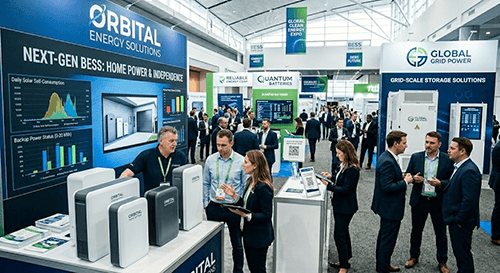
Yes, expanding an existing Hicoenergy battery bank is possible when planned correctly. By ensuring compatibility, following technical guidelines, and using scalable designs, additional batteries can be integrated to increase capacity, improve backup duration, and enhance energy flexibility. This approach allows battery banks to grow alongside changing residential or commercial energy demands without replacing the entire system.
Understanding the Basics of Hicorenergy Battery Banks
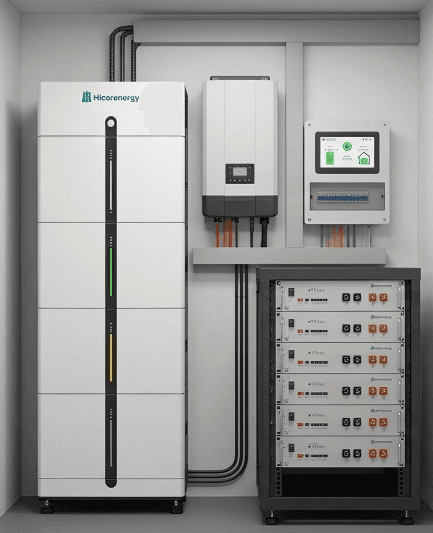
Hicorenergy battery banks are modular energy storage systems designed to store electricity generated from solar panels or the grid for later use. Built on lithium iron phosphate (LiFePO₄) technology, these battery banks emphasize safety, long cycle life, and stable performance. Their architecture supports parallel connections, making them suitable for incremental capacity expansion. Whether applied in residential backup systems or small commercial installations, Hicoenergy battery banks are engineered to balance efficiency, reliability, and long-term scalability.
Benefits of Expanding Your Battery Bank Capacity
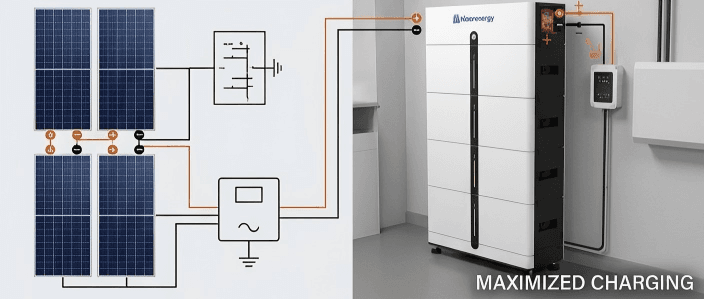
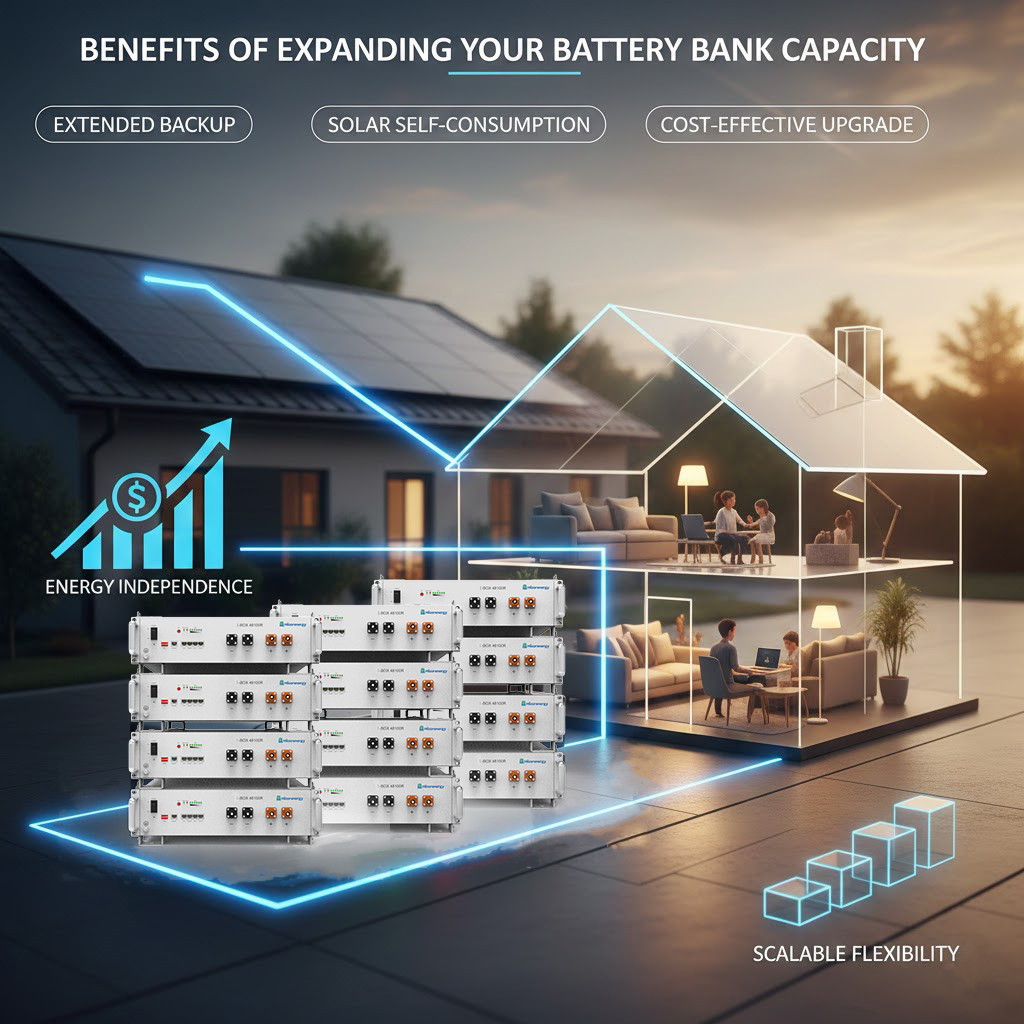
Expanding battery banks offers clear advantages for users facing rising energy consumption or unreliable grid conditions. Additional capacity extends backup time during outages, allowing critical loads to operate longer. It also improves solar self-consumption by storing excess daytime generation for evening use, reducing reliance on the grid. From a financial perspective, expansion is often more cost-effective than replacing an entire system, as existing infrastructure—such as inverters and mounting solutions—can remain in service. Similar to modular energy concepts promoted across the industry, scalable battery banks also provide flexibility, enabling households and businesses to align energy storage investments with gradual demand growth rather than large upfront expenditures.
Technical Considerations for Adding New Batteries
Before expanding battery banks, several technical factors must be evaluated to ensure stable and safe operation. Voltage consistency, battery chemistry, and state of health all influence whether new modules can integrate smoothly with existing ones. Battery management systems (BMS) must be capable of recognizing and balancing additional units. Environmental conditions such as temperature, ventilation, and installation space also matter, as higher capacity increases thermal and electrical loads. Addressing these considerations early helps avoid performance mismatches and prepares the system for a seamless upgrade path.
Compatibility: How to Ensure New Batteries Work with Existing Ones
Compatibility is the foundation of successful battery bank expansion. New batteries should match the original system in terms of chemistry, nominal voltage, and capacity rating. Mixing different battery types or significantly different ages can lead to uneven charging and discharging, reducing overall efficiency and lifespan. Hicorenergy battery banks are designed with standardized modules and wide inverter compatibility, which simplifies expansion when the same product series is used. Firmware and BMS communication protocols must also align so that all batteries share data accurately. Proper compatibility checks ensure that the expanded battery bank functions as a unified system rather than a collection of mismatched components.
Installation Process: Key Steps to Integrate Additional Batteries
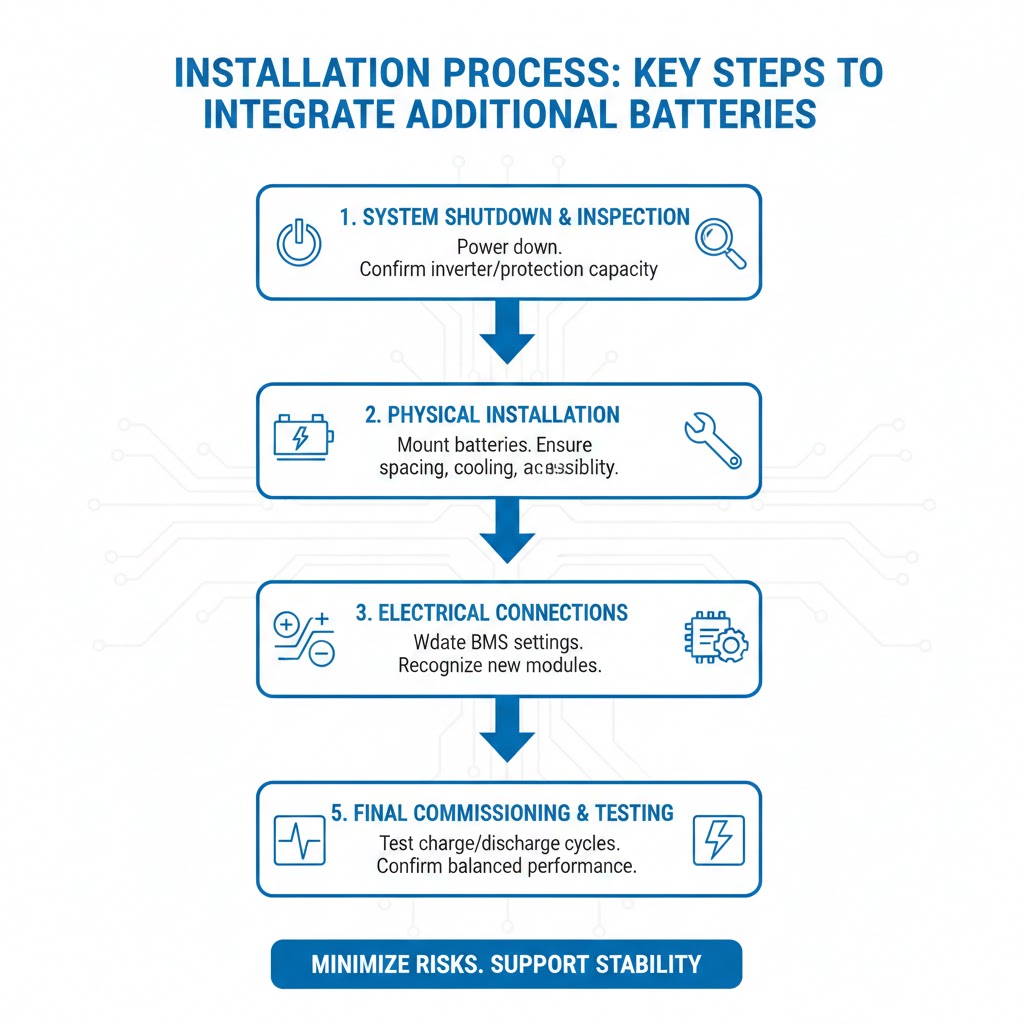
Integrating additional batteries into an existing battery bank follows a structured process. First, the system should be powered down and inspected to confirm available capacity on the inverter and protection devices. Physical installation comes next, with batteries mounted according to spacing and orientation guidelines to ensure adequate cooling and accessibility. Electrical connections are then added in parallel or series as specified, followed by configuration of the BMS to recognize the new modules. Final commissioning includes testing charge and discharge cycles to confirm balanced performance. Adhering to these steps minimizes installation risks and supports long-term system stability.
Expert Resources: Where to Find Guidance for Distributors and Installers
Professional guidance plays a crucial role in battery bank expansion, particularly for distributors and installers managing multiple projects. Hicorenergy provides technical documentation, compatibility lists, and remote monitoring tools to support proper system design and upgrades. Its product portfolio—including residential energy storage batteries, low-voltage stackable systems, and commercial solutions—has been developed with scalability in mind. Training resources and responsive technical support help partners address configuration challenges efficiently. By relying on manufacturer-backed expertise, installers can ensure that expanded battery banks meet performance expectations and local compliance requirements.
Summary
Hicorenergy battery banks are built for scalable growth, allowing users to expand capacity safely and efficiently as energy needs evolve. With compatible modules and professional support, expansion becomes a practical long-term strategy rather than a complex overhaul.
For further information or technical support, please contact
Email: info@hicorpower.com
WhatsApp: +86 181-0666-3226