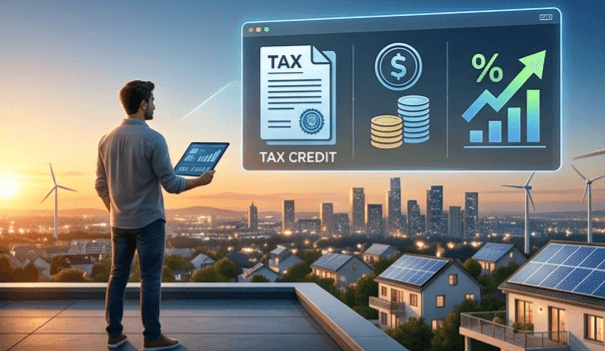
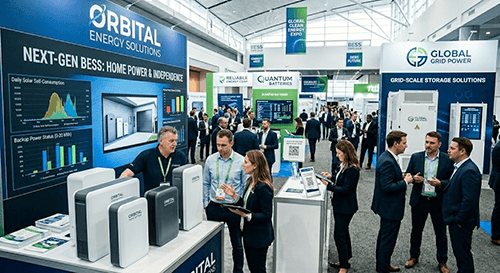
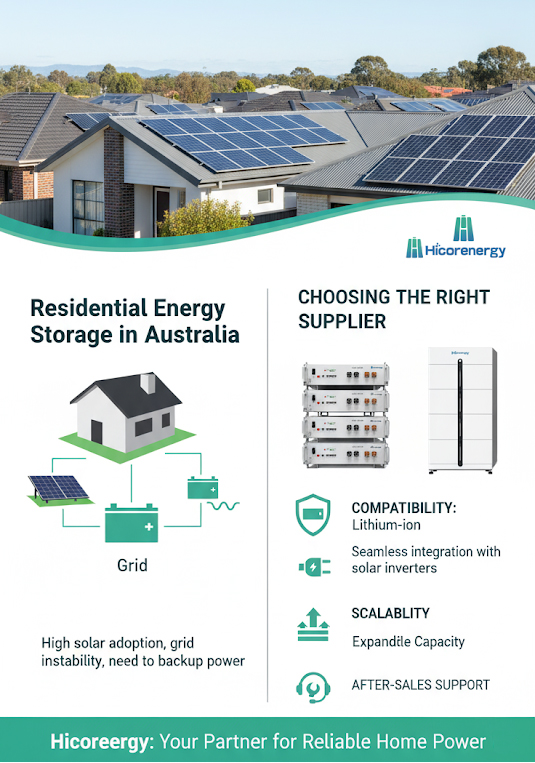
Residential energy storage is becoming increasingly important in Australia, where solar adoption is high and grid instability is a growing concern. Choosing the right supplier can determine whether homeowners enjoy long-lasting efficiency, safety, and cost-effectiveness—or face costly replacements and inefficiencies.
A top residential energy storage supplier in Australia should provide safe, durable lithium-ion battery systems, offer compatibility with solar inverters, ensure scalability, and deliver strong after-sales support.
Who Are the Leading Energy Storage Providers for Homes in Australia?
Australia’s residential energy storage market is competitive, with both local and international suppliers serving growing demand. Local providers like Redback Technologies and Sonnen (backed by Shell) have a strong presence, while international companies such as BYD and LG Chem continue to expand their Australian footprint. Emerging suppliers from China, including Hicorenergy, are entering the market by offering high-performance and affordable lithium-ion solutions. These companies provide systems that balance efficiency, safety, and scalability, appealing to households looking for long-term investments in solar energy storage.
How Can You Find the Perfect Energy Storage System for Your Home in Australia?
The ideal system depends on household energy usage, solar panel capacity, and budget. Homeowners should evaluate suppliers based on battery life cycles, warranty terms, compatibility with existing systems, and after-sales service. Partnering with a reliable supplier ensures both peace of mind and financial savings.
Why Should You Invest in Residential Energy Storage in Australia?
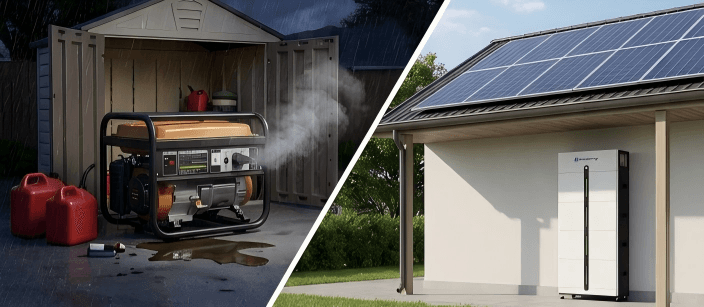
Investing in residential energy storage in Australia helps homeowners maximize solar energy while reducing reliance on the grid. With frequent blackouts in some regions and rising electricity tariffs, storage systems allow energy independence and financial savings. Beyond personal benefits, residential energy storage contributes to a greener energy future, reducing carbon emissions and easing pressure on the national grid. In a country with one of the highest solar adoption rates globally, energy storage ensures that solar energy does not go to waste and that households remain powered even during peak demand or outages.
What Are the Average Costs of Residential Energy Storage Systems in Australia?
The cost of residential energy storage systems in Australia varies depending on capacity, technology, and brand. On average, households spend between AUD 8,000 and AUD 15,000 for a lithium-ion system paired with solar. While upfront costs remain a challenge, suppliers like Hicorenergy offer cost-effective solutions without compromising quality.
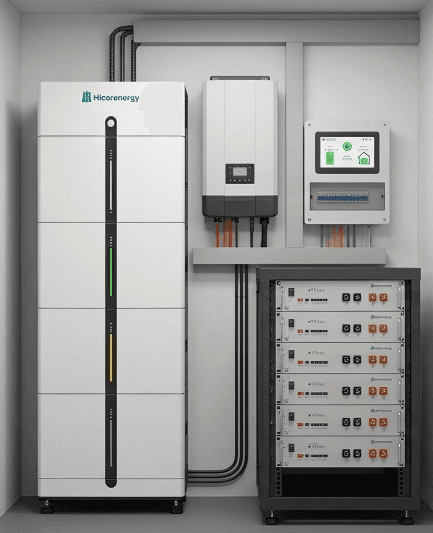
Hicorenergy’s I-BOX 48100R provides over 6,000 cycles, 95% efficiency, and compatibility with most inverters, making it a reliable choice for Australian homes. The C5° model enhances performance with remote monitoring and higher discharge rates, while the Si LV1 offers quick installation and modular scalability up to 122.88 kWh, ideal for households with higher energy needs. These products balance durability, safety, and affordability, addressing key buyer concerns in the Australian market.
How Can Energy Storage Improve Solar Power Efficiency for Australian Homes?
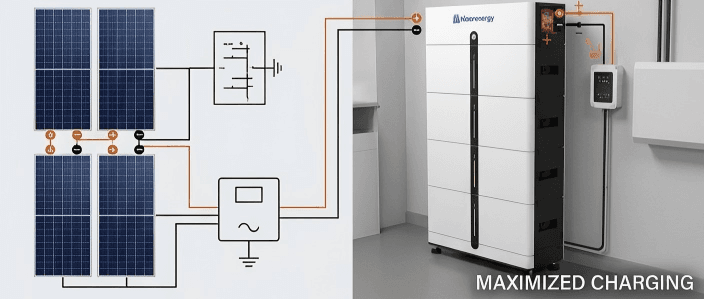
Without storage, much of the solar energy generated during the day is exported back to the grid at low rates. Energy storage allows households to retain excess solar power and use it during evenings or cloudy days, maximizing return on investment. In regions with time-of-use tariffs, batteries enable homeowners to store electricity when rates are low and consume it during peak hours, significantly reducing bills. For Australian households, integrating storage ensures that solar energy becomes a dependable primary power source, improving overall system efficiency and energy security.
Conclusion
Residential energy storage suppliers in Australia play a crucial role in supporting solar adoption and energy independence. Hicorenergy delivers safe, reliable, and scalable lithium-ion systems tailored for Australian homes, helping households cut costs and ensure power security.
Contact Hicorenergy:
Email: info@hicorpower.com
WhatsApp: +86 181-0666-3226