 Stacked battery technology is transforming the energy storage landscape, offering groundbreaking solutions for efficient power management in renewable energy systems. By layering battery cells to maximize performance, this innovation delivers superior energy density, enhanced efficiency, and scalable storage—making it an ideal choice for integrating solar and other renewable sources. As industry leaders like Hicorenergy advance this field, stacked battery technology continues to provide compact, reliable, and eco-friendly power storage that meets the rising global demand for clean energy.
Optimizing Energy with Advanced Stacked Battery Design
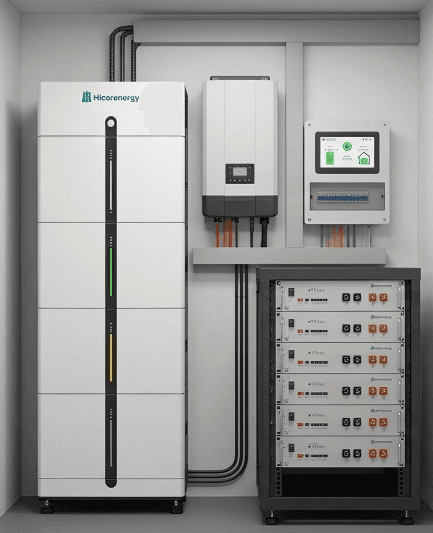
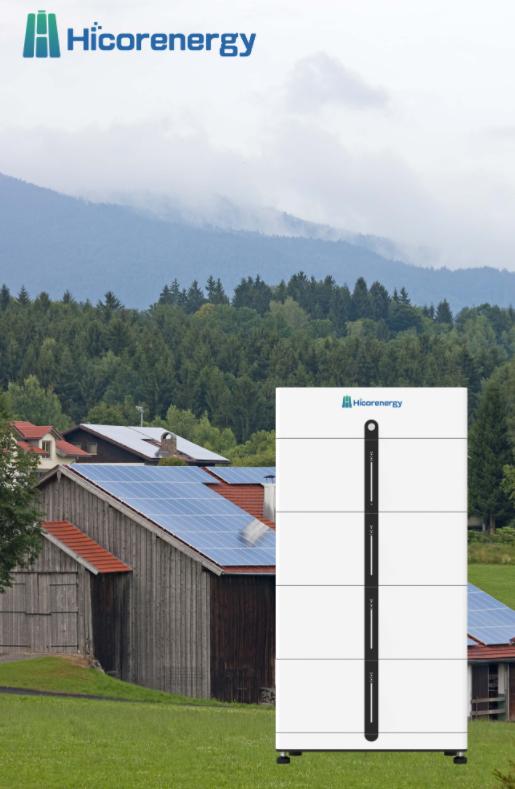
Stacked battery design redefines how energy storage systems are built, focusing on architectural efficiency to boost power capacity and save space. By arranging cells vertically or horizontally, this design significantly increases energy density compared to conventional setups. A prime example is the Hicorenergy SI LV1, which uses a modular stacked battery design to offer expandable storage tailored to user needs. Key technical benefits include improved thermal regulation, lower internal resistance, and integrated safety separators to prevent short circuits. Utilizing high-conductivity electrodes, stacked battery design also minimizes energy loss during cycling. This adaptability makes it perfect for residential or agricultural use, where space constraints and dependable performance are top priorities.
Why Stacked Lithium-Ion Batteries Are Leading the Energy Revolution
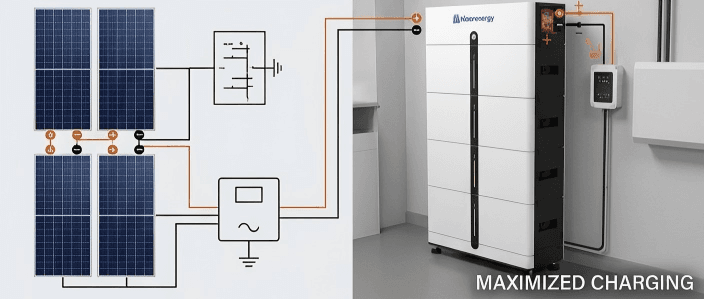
Stacked lithium-ion batteries mark a major leap forward in energy storage, combining advanced chemistry with robust structural design. Known for rapid charging, extended lifespan, and high energy output, these batteries are essential for renewable applications. The Hicorenergy SI LV1, equipped with stacked lithium-ion batteries, ensures consistent energy conversion—even in fluctuating weather. These units are lighter, deliver higher voltage, and sustain thousands of cycles with minimal degradation. Technologically, the stacked configuration improves heat dissipation, reducing overheating risks common in lithium-ion systems. This results in greater energy independence, allowing households and businesses to store surplus solar power efficiently, lower electricity costs, and reduce their environmental footprint.
Extending Longevity: Effective Stacked Battery Lifecycle Management
Managing the stacked battery lifecycle is essential to maximizing durability and value in energy storage systems. This process covers everything from production and operation to maintenance and eventual decommissioning. The Hicorenergy SI LV1 includes smart diagnostics to monitor battery health in real time, supporting long-term reliability. Critical factors such as depth of discharge, charging speed, and operating conditions all impact the stacked battery lifecycle. Through firmware upgrades and cell-balancing algorithms, these systems preserve uniformity across cells and delay aging. Proper lifecycle management not only boosts user trust and system uptime but also supports sustainability by extending battery service life and reducing replacement frequency.
Embracing Sustainability: The Importance of Stacked Battery Recycling
Stacked battery recycling is a crucial component of the circular economy, helping to mitigate the environmental impact of used energy storage products. With the rising adoption of stacked battery technology, efficient recycling methods are needed to reclaim precious materials such as lithium, cobalt, and nickel. The Hicorenergy SI LV1 is engineered for easy end-of-life processing, with modular parts that streamline disassembly. Advanced recycling techniques—including shredding, hydrometallurgy, and pyrometallurgy—enable material recovery and reuse, curbing waste and reducing reliance on virgin resources. By championing stacked battery recycling, manufacturers not only cut carbon emissions but also support global sustainability targets, ensuring today’s energy innovations benefit future generations.
Join Hicorenergy in embracing solar battery storage and step confidently into a cleaner, greener tomorrow.
Contact us via Email: info@hicorpower.com or WhatsApp: +86 181-0666-3226.