The Genesis of Reliable Power: A Look Inside Energy Storage Cabinets
In an era where consistent and reliable power is not just a convenience but a critical necessity, the demand for advanced energy solutions is ever-increasing. At Hicor Energy, we've been on a journey to meet this demand head-on, and a significant part of this journey involves perfecting our energy storage cabinets. These aren't just metal boxes; they are the heart of resilient power systems. The development of our I-BOX 48100R, for instance, began with a core question: how can we provide not just stored energy, but absolute peace of mind for critical applications? This question guided every decision, from material selection to the integration of intelligent features, pushing us to innovate beyond standard expectations.
From Concept to Reality: Engineering the I-BOX 48100R
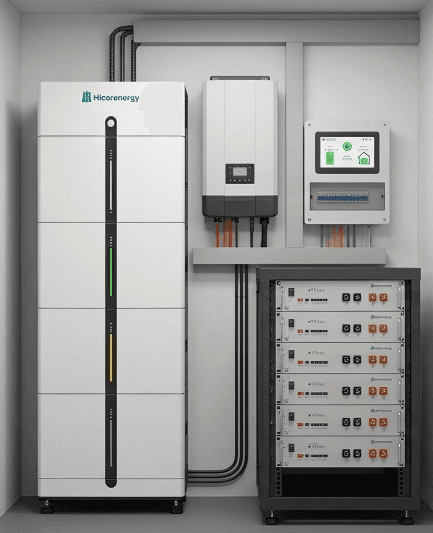
The path from an idea to a tangible product like the I-BOX 48100R is filled with meticulous planning and engineering choices. One of our primary goals was to create exceptional battery storage solutions that could withstand demanding environments. This led us to select a rugged, rack-mountable design. Why rack-mountable? Because seamless integration into existing infrastructure, especially in data centers or renewable energy setups, was a non-negotiable requirement from our early discussions with clients. The polished aluminum casing wasn't just an aesthetic choice; it was chosen for its durability and contribution to thermal management, ensuring the lithium-ion cells perform optimally. We envisioned a system that slots in easily and works tirelessly, a true workhorse behind the scenes.
Intuitive Power: The Thought Process Behind User Interface and Monitoring
We believe that powerful technology should also be user-friendly. When designing the I-BOX 48100R's interface, our team spent considerable time thinking about the operator's experience. How could we make monitoring effortless yet comprehensive? This led to the inclusion of clear visual indicators like state-of-charge (SOC) LEDs and alarm (ALM) lights, providing at-a-glance system status. The inclusion of CAN and RS485 ports, alongside dedicated link interfaces, stemmed from understanding the diverse needs for system integration and remote management, a key aspect when considering modular energy storage system expansion and control. We wanted to ensure that managing sophisticated power didn't require a steep learning curve.
Future-Proofing Energy: The Vision Behind Modular Energy Storage
The energy needs of today might not be the energy needs of tomorrow. This foresight is central to our philosophy at Hicor Energy and is deeply embedded in the design of the I-BOX 48100R. The "ADD" functionality, which allows multiple units to be connected, is a direct result of our commitment to modular energy storage. We asked ourselves, "How can we provide a solution that grows with our clients?" The answer was a system that could be easily scaled up in series or parallel. This adaptability means that an initial investment can be expanded without overhauling the entire setup, making it a sustainable and economically sensible approach for growing projects. This modularity is at the heart of creating versatile and long-lasting power systems.
Safety by Design: Our Non-Negotiable Commitment
When dealing with high-energy systems, safety is paramount. It’s not just a feature; it’s a foundational principle at Hicor Energy. For the I-BOX 48100R, this translated into careful consideration of every component and connection. The inclusion of grounding terminals and high-quality insulated polarity terminals (+ and -), with the distinctive orange positive connector for quick and error-free identification, are deliberate design choices. Internally, the battery management system (BMS) works tirelessly to protect against overcharge, over-discharge, over-current, and temperature extremes. Our engineering team conducts rigorous testing to ensure that systems like the I-BOX meet and exceed stringent industrial safety standards, because reliability and safety go hand-in-hand.
Beyond the Cabinet: Powering Diverse Applications
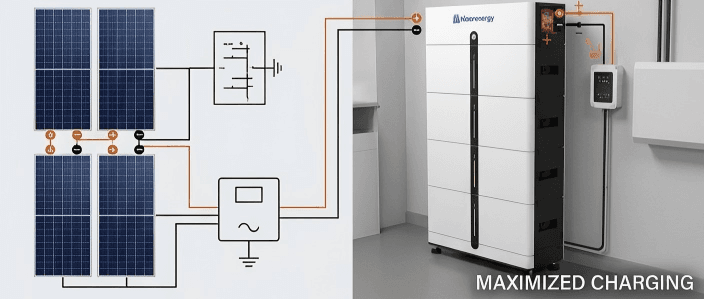
The true test of any energy solution is its performance in the real world. The I-BOX 48100R was conceived with versatility in mind, designed to be more than just a box. It is an enabling technology for telecommunication towers that need uninterrupted service, for solar energy storage cabinets that ensure power availability day and night, and for UPS systems in data centers where even a millisecond of downtime is unacceptable. The robust nature of our energy storage cabinets makes them suitable for these diverse and demanding applications. While the I-BOX is rack-mounted, the principles of efficient energy management and reliable storage are also relevant to the broader pursuit of solutions like improved portable energy storage, as underlying battery technology and safety mechanisms often share common research and development paths. Our goal is to empower various sectors with dependable energy.
Hicor Energy's Commitment: More Than Just Storage
At Hicor Energy, our work on products like the I-BOX 48100R is driven by a commitment that extends beyond simply storing electricity. It’s about envisioning and building the future of energy – a future that is more reliable, efficient, and sustainable. The journey "behind the scenes" in developing these advanced energy storage cabinets involves continuous innovation, a deep understanding of our clients' evolving needs, and an unwavering dedication to quality and safety. We strive to combine cutting-edge technology with practical design, ensuring that our battery storage solutions deliver not just power, but empowerment. As we look forward, we remain focused on pushing the boundaries of what's possible in energy storage, helping build a more resilient and powered world.