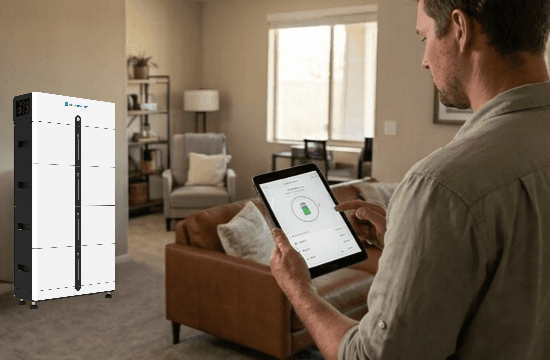
A home battery system can reduce electricity bills through time-of-use optimization, solar self-consumption, and available incentives. The true value depends on the battery payback period, installation cost, usage patterns, and government support such as a battery storage tax credit. This article explains how to calculate home battery savings and determine real return on investment.
Battery Payback Period: How Long Until Your System Pays for Itself?
The battery payback period refers to the number of years required for cumulative home battery savings to equal the total system cost. For most households, this period ranges from 5 to 12 years, depending on electricity rates, incentives, and usage behavior.
To estimate the battery payback period, homeowners must consider:
-
Total installed system cost
-
Available battery storage tax credit or rebates
-
Annual electricity bill savings
-
Expected system lifespan (often 10–20 years for LiFePO4 batteries)
For example, if a system costs $10,000 and qualifies for a 30% battery storage tax credit, the net cost becomes $7,000. If annual home battery savings equal $1,000, the battery payback period would be approximately 7 years.
Modern lithium iron phosphate (LFP) systems such as Hicorenergy’s I-BOX 48100R offer over 6,000 cycles and 95% round-trip efficiency, improving long-term savings potential. A longer cycle life directly reduces lifecycle cost and shortens the effective battery payback period.
How to Calculate Your Annual Savings: A Simple 4-Step Formula
Understanding your real home battery savings requires more than guesswork. A simple battery ROI calculator approach can provide clarity:
-
Determine your average peak and off-peak electricity rates.
-
Calculate the daily kWh your battery can shift or store.
-
Multiply shifted kWh by the rate difference.
-
Add solar self-consumption savings and backup value.
This formula provides a clear starting point for estimating the battery payback period. Continue reading to compare savings strategies and explore how incentives can dramatically improve ROI.
Time-of-Use Arbitrage vs. Solar Self-Consumption: Which Strategy Maximizes ROI?
There are two primary strategies that determine home battery savings: time-of-use (TOU) arbitrage and solar self-consumption.
Time-of-Use Arbitrage
In regions with variable electricity pricing, homeowners can charge their battery during low-rate periods and discharge during high-rate periods. For example:
-
Off-peak rate: $0.10/kWh
-
Peak rate: $0.35/kWh
-
Rate difference: $0.25/kWh
If a 10 kWh battery shifts 3,000 kWh annually, potential savings equal:
3,000 × $0.25 = $750 per year
This directly impacts the battery payback period and improves the results of any battery ROI calculator.
Solar Self-Consumption
Without storage, excess solar generation is often exported at lower feed-in tariffs. With a home battery system, that energy can be stored and used later, avoiding higher retail electricity prices. This increases self-consumption from roughly 30–40% to as high as 80–90%.
Hicorenergy’s SI LV1 modular home battery solution supports flexible capacity from 10.24 kWh to 30.72 kWh per stack, enabling homeowners to match storage size with actual load demand. Higher efficiency and scalable design allow optimized solar self-consumption, accelerating home battery savings.
The optimal strategy depends on local electricity pricing. In high TOU differential markets, arbitrage may deliver faster battery payback periods. In strong solar regions with low feed-in tariffs, maximizing self-consumption often provides superior ROI.
Federal Rebates, Tax Credits, and Incentives That Shorten Your Payback
Government incentives significantly influence the battery payback period. The most impactful tool in many markets is the battery storage tax credit.
For example, in the United States, standalone energy storage systems may qualify for a federal Investment Tax Credit (ITC), often covering 30% of eligible installation costs. On a $12,000 system, that could mean a $3,600 reduction in upfront expense.
Additional incentives may include:
-
State-level rebates
-
Utility demand-response payments
-
Performance-based incentives
-
Virtual power plant (VPP) participation payments
Incorporating incentives into a battery ROI calculator can reduce payback timelines by 2–4 years. For instance:
| Scenario | System Cost | Incentive | Net Cost | Annual Savings | Payback |
|---|---|---|---|---|---|
| No Incentive | $10,000 | $0 | $10,000 | $1,000 | 10 years |
| 30% Tax Credit | $10,000 | $3,000 | $7,000 | $1,000 | 7 years |
By lowering initial capital expenditure, the battery storage tax credit makes home battery savings more predictable and financially attractive.
Additionally, higher-quality lithium systems with long warranties—such as Hicorenergy’s LiFePO4 platforms—help ensure performance stability across thousands of cycles, protecting projected ROI.
Conclusion: Reliable Battery Solutions from Hicorenergy
Hicorenergy provides advanced lithium home battery systems including I-BOX 48100R and SI LV1, offering high efficiency, long cycle life, scalable design, and strong safety performance—helping customers shorten their battery payback period and maximize home battery savings.
For product details and partnership support:
Email: info@hicorpower.com
WhatsApp: +86 181-0666-3226