A power cut occurs when electricity supply from the grid is interrupted, leaving homes without power. In 2026, rising grid instability and extreme weather make outages more common. A Home Battery Backup System provides automatic backup power, keeps essential appliances running, and stores solar energy to ensure reliable electricity during blackouts.
What Causes Power Outages? Understanding Grid Failures and Blackouts in 2026
Many homeowners often ask what causes power outages, especially as electricity disruptions become more frequent worldwide. In 2026, several factors contribute to grid failures and blackouts. Aging infrastructure remains one of the primary causes. Many power grids were built decades ago and struggle to handle growing electricity demand.
Extreme weather events also play a major role. Storms, heatwaves, floods, and wildfires can damage transmission lines and substations, resulting in large-scale outages. In addition, rapid urbanization and the increasing adoption of electric vehicles are placing additional strain on electricity networks.
Another key issue is grid instability, where fluctuations in voltage or frequency occur due to sudden changes in energy supply or demand. Renewable energy sources like solar and wind, while beneficial, can introduce variability into the grid if not properly balanced.
Because of these challenges, homeowners are increasingly installing Home Battery Backup Systems combined with solar battery storage. These systems provide reliable emergency electricity and reduce reliance on unstable power grids.
Instant Automatic Backup Power: How Battery Storage Detects and Responds to Grid Failure
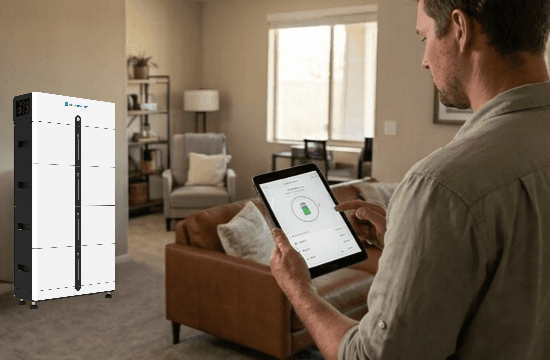
A modern Home Battery Backup System provides automatic backup power the moment a power outage occurs. Advanced battery systems constantly monitor grid conditions through an intelligent inverter. When the system detects a sudden grid failure, it automatically disconnects from the utility grid and begins supplying electricity from stored energy.
This entire transition typically happens within milliseconds, meaning lights, internet routers, and other essential appliances continue operating without interruption. Homeowners often do not even notice the switchover.
Because the system operates automatically, there is no need to manually start generators or connect portable power devices. This seamless transition makes battery storage one of the most reliable backup power solutions available today. The following sections explain how these systems protect homes and keep critical equipment running during extended outages.
Keep Essential Appliances Running: Refrigerators, Medical Devices, and Sump Pumps
One of the most important benefits of a Home Battery Backup System is the ability to keep essential appliances running during power outages. While many outages last only a few hours, even a short interruption can cause major problems for households.
Refrigerators and freezers require continuous electricity to keep food safe. Without power, perishable food can spoil quickly. Medical devices such as oxygen concentrators, CPAP machines, or home dialysis systems also depend on a stable electricity supply. For families relying on these devices, reliable automatic backup power is critical.
Basements equipped with sump pumps also require electricity to prevent flooding during storms. When outages occur during heavy rainfall, the lack of power can allow water to accumulate rapidly.
Modern solar battery storage systems are designed to support these appliances efficiently. For example, modular lithium battery systems like the Hicorenergy SI LV1 provide scalable backup energy ranging from 10.24 kWh to 30.72 kWh per stack, allowing homeowners to maintain electricity for essential devices throughout an outage. The system also supports plug-and-play installation and delivers strong continuous power output, ensuring reliable protection for critical household equipment.
 Solar + Storage: How Battery Systems Extend Power When Outages Last for Days
While many power cuts last only a few hours, severe storms or grid failures can cause outages that last for several days. In these situations, combining solar panels with solar battery storage becomes extremely valuable.
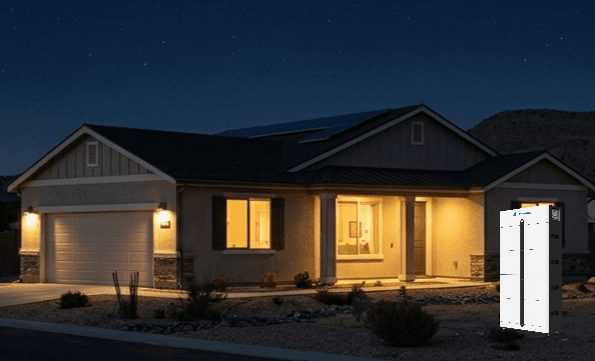
During the day, solar panels generate electricity from sunlight and recharge the battery system. This stored energy is then used during the night when solar panels are not producing power. The result is a continuous energy cycle that significantly extends the available electricity supply.
This setup allows a Home Battery Backup System to operate for much longer than a battery alone. Even during prolonged outages, homes can maintain lighting, communication systems, refrigeration, and other essential appliances.
Advanced lithium battery solutions such as the Hicorenergy I-BOX 48100R are designed specifically for solar integration. The system uses automotive-grade LiFePO4 battery cells, offers more than 6000 charge cycles, and achieves over 95% round-trip efficiency. It is compatible with most major inverter brands and can scale up to 491.52 kWh, providing a highly flexible solution for long-term solar energy storage.
Protection from Grid Instability: Voltage Fluctuations and Surge Prevention
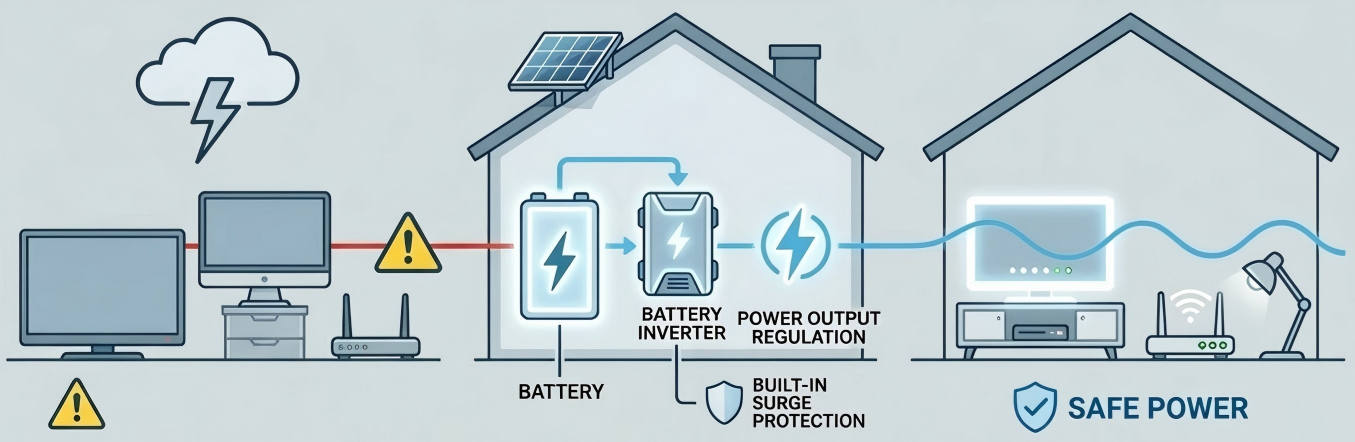
Power outages are not the only risk associated with unstable electricity grids. Grid instability can also cause voltage fluctuations and sudden power surges that damage sensitive electronics.
Devices such as televisions, computers, routers, and smart home systems are particularly vulnerable to electrical spikes. When voltage rises unexpectedly, these appliances can suffer permanent damage or experience shortened lifespans.
A Home Battery Backup System helps protect homes from these problems by stabilizing the electricity supply. Because the system uses a battery inverter to regulate power output, it delivers consistent voltage levels to household circuits.
In addition, many systems include built-in surge protection and advanced battery management systems that monitor electrical conditions continuously. By isolating the home from unstable grid conditions during disruptions, the system provides both automatic backup power and protection against damaging electrical fluctuations.
Whole-Home Backup vs. Partial Backup: Choosing the Right System for Your Needs
When installing a Home Battery Backup System, homeowners must decide between whole-home backup and partial backup configurations.
Whole-home backup systems are designed to power an entire house during outages. These setups require larger battery capacities but provide the convenience of running all appliances, lighting, and electronics without restrictions.
Partial backup systems, on the other hand, prioritize essential appliances such as refrigerators, lighting circuits, communication equipment, and medical devices. By focusing on critical loads, these systems require smaller battery capacities and are typically more affordable.
The choice between the two options depends on household energy consumption, budget, and outage frequency. Homes located in areas with frequent blackouts may benefit from larger systems, while others may prefer targeted protection for key appliances.
Regardless of the configuration, modern solar battery storage solutions provide flexible scaling options, allowing homeowners to expand their energy storage capacity as needs grow.
Hicorenergy provides advanced Home Battery Backup Systems designed for safety, reliability, and long-term performance. Products such as the SI LV1 and I-BOX 48100R offer scalable lithium battery storage, intelligent monitoring, and high efficiency, helping households maintain stable electricity even during severe grid instability.
For more information, please contact:
Email: info@hicorpower.com
WhatsApp: +86 181-0666-3226