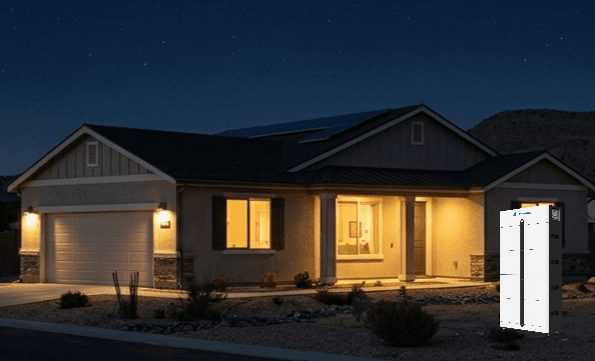
 Australia’s residential storage sector in 2026 is shaped by lithium ion home storage dominance, expanding VPP participation, and evolving federal incentives. With the Home battery rebate Australia 2026 reshaping purchasing decisions, homeowners are prioritizing VPP-ready systems, scalability, and long-term ROI when selecting the best home battery Australia 2026.
Lithium-Ion Remains King: Why This Chemistry Still Leads the Residential Market
Despite emerging alternatives, lithium ion home storage continues to dominate Australia’s residential battery sector in 2026. The reasons are clear: high energy density, long cycle life, mature supply chains, and proven safety performance—especially with LiFePO4 (LFP) chemistry.
Modern lithium ion home storage systems typically deliver:
-
6,000+ charge cycles
-
90–95% round-trip efficiency
-
10–20 year design life
-
Compact wall-mounted or modular formats
Compared to older lead-acid systems, lithium batteries offer three to four times longer lifespan and significantly lower maintenance requirements. For households managing high rooftop solar penetration—Australia leads globally in residential PV adoption—lithium remains the most cost-effective pairing.
In the race for the Best home battery Australia 2026, performance consistency, warranty reliability, and scalability remain decisive. Lithium ion home storage continues to meet these expectations while supporting advanced software features and VPP battery requirements.
The May 2026 Rebate Shift: How New Federal Incentives Reshape Technology Choices
The Home battery rebate Australia 2026 adjustments introduced in May significantly influence technology selection. Expanded eligibility now prioritizes VPP-ready systems and higher safety standards. This shift encourages homeowners to consider not just upfront cost but long-term compatibility with grid services.
Understanding how the rebate interacts with VPP battery requirements is critical. Continue reading to explore why virtual power plant participation is quickly becoming the defining factor in choosing the Best home battery Australia 2026.
Virtual Power Plants Go Mainstream: VPP-Capable Batteries Become the New Standard
In 2026, Virtual Power Plants (VPPs) are no longer niche programs—they are central to Australia’s distributed energy strategy. Utilities aggregate thousands of residential batteries to stabilize the grid, manage peak demand, and support renewable integration.
To qualify under most VPP battery requirements, systems must offer:
-
Remote monitoring and firmware updates
-
Fast response times for grid events
-
Stable communication protocols
-
Smart energy management software
Participation can generate additional income streams, sometimes ranging from AUD $200–$600 annually depending on region and grid conditions. This directly improves return on investment and shortens effective payback.
As a result, homeowners evaluating the Best home battery Australia 2026 increasingly prioritize VPP compatibility over pure storage capacity. Lithium ion home storage systems with integrated smart control platforms are becoming the default choice.
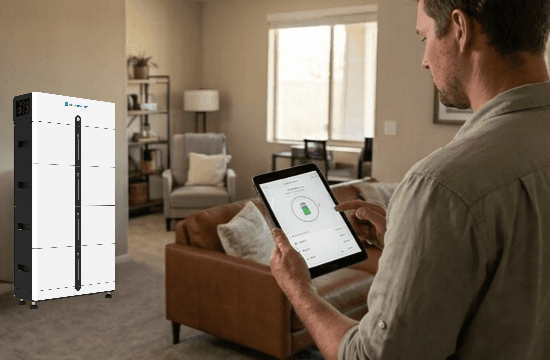
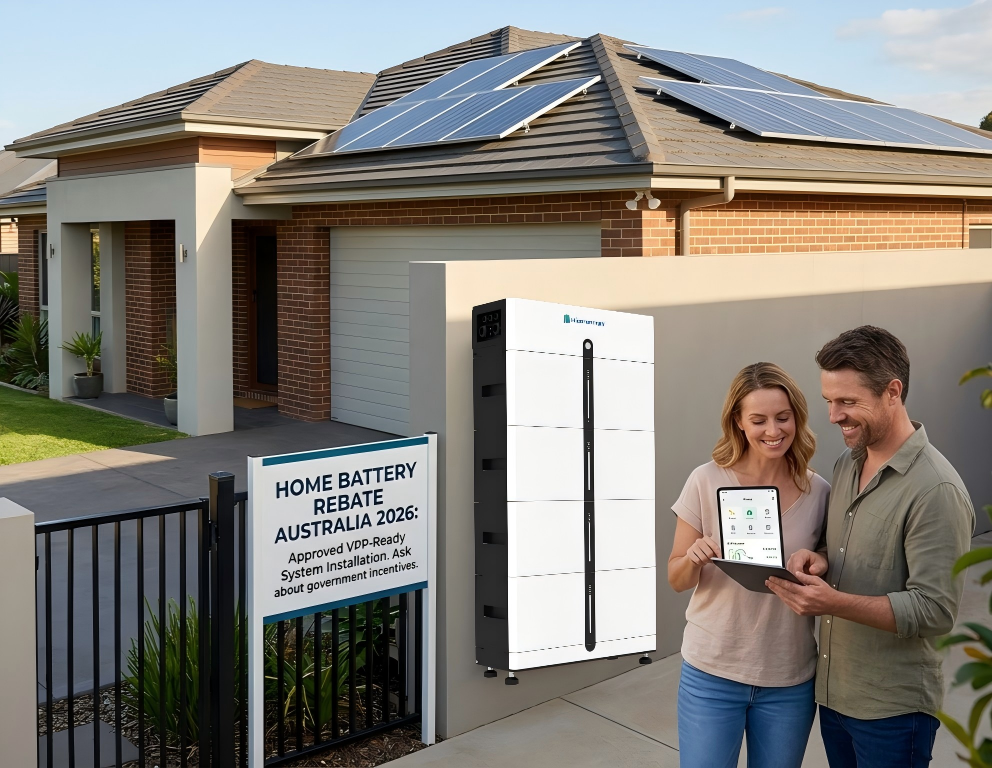
Hicorenergy’s SI LV1 modular residential system supports real-time monitoring and scalable expansion up to 122.88 kWh. Its plug-and-play design and advanced BMS architecture align with modern VPP battery requirements, ensuring long-term adaptability under evolving Home battery rebate Australia 2026 policies.
In this environment, batteries are no longer passive backup devices—they are active grid participants.
Battle of the Brands: Sigenergy, Sungrow, and Anker SOLIX Compete for 2026 Market Share
Competition in 2026 is intensifying among major brands seeking dominance in the Australian market.
Sigenergy emphasizes AI-driven energy management and sleek modular architecture.
Sungrow leverages its global inverter leadership and integrated solar-plus-storage ecosystems.
Anker SOLIX focuses on plug-and-play simplicity and brand recognition in consumer electronics.
Each company is positioning its offering as the Best home battery Australia 2026, highlighting:
-
Integrated hybrid inverters
-
App-based smart control
-
VPP compatibility
-
Competitive pricing under the Home battery rebate Australia 2026
However, beyond brand marketing, homeowners are increasingly focused on lifecycle economics. Key comparison factors include:
-
Cost per usable kWh
-
Warranty structure
-
Scalability options
-
Compliance with VPP battery requirements
Hicorenergy’s I-BOX 48100R, built with Tier 1 automotive-grade LFP cells and >95% efficiency, provides broad inverter compatibility and scalability up to 491.52 kWh. Its long cycle life enhances lithium ion home storage reliability, offering distributors and installers a competitive alternative in the Australian market.
Ultimately, the winning systems in 2026 are those combining technical performance, software intelligence, and alignment with federal rebate structures.
Conclusion: Scalable Lithium Solutions from Hicorenergy
Hicorenergy delivers advanced lithium ion home storage solutions including SI LV1 and I-BOX 48100R, offering scalable architecture, high efficiency, VPP-ready smart monitoring, and long cycle life—supporting evolving Home battery rebate Australia 2026 requirements and future-proof residential energy systems.
For product details and partnership support:
Email: info@hicorpower.com
WhatsApp: +86 181-0666-3226