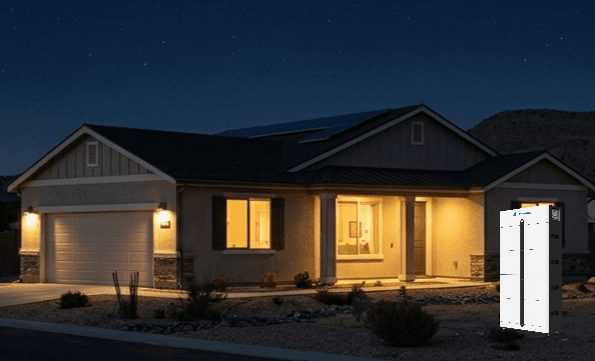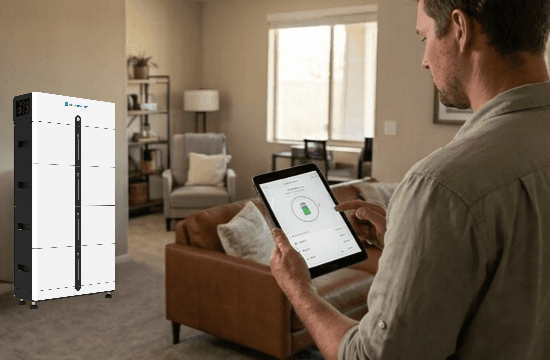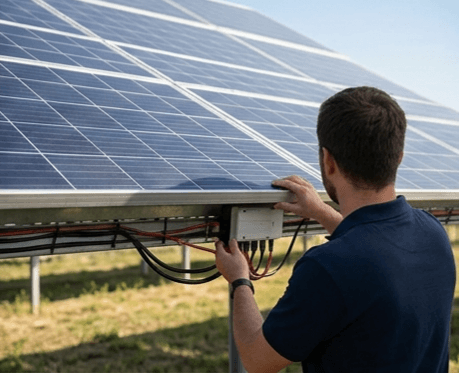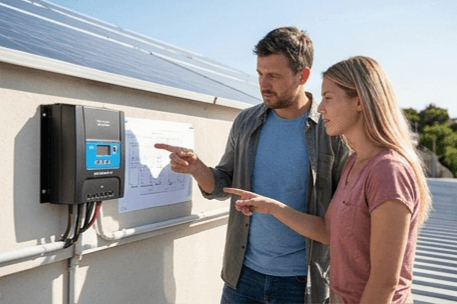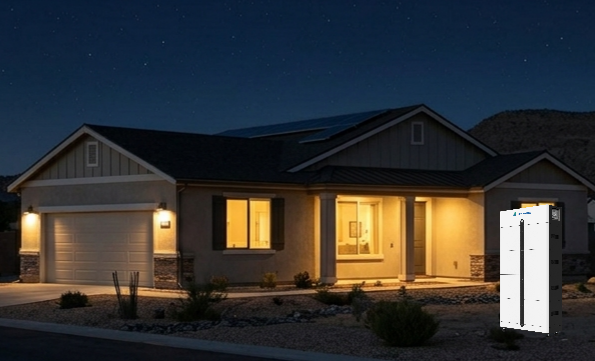
Home solar battery storage works by capturing sunlight through solar panels, converting it into electricity, storing excess energy in batteries, and delivering power when needed. Understanding how solar batteries work helps homeowners improve energy efficiency, reduce grid dependence, and optimize every solar battery charging cycle for long-term savings and reliability.
How Solar Battery Storage Works Step by Step: From Sunlight to Stored Energy
To understand how solar batteries work, it is essential to follow the energy flow step by step. First, solar panels capture sunlight and convert it into direct current (DC) electricity. This electricity then passes through an inverter, converting it into alternating current (AC) for household use. In home solar battery storage systems, excess energy is directed to a battery instead of being sent back to the grid.
During the solar battery charging cycle, energy is stored chemically within lithium-ion cells. When sunlight is unavailable—such as at night—the stored energy is discharged to power appliances. Advanced battery systems include a Battery Management System (BMS) to regulate voltage, temperature, and safety. Products like Hicorenergy’s I-BOX 48100R, with over 95% efficiency and ≥6000 cycles, demonstrate how solar battery storage explained in practice delivers stable and long-lasting performance for a solar battery for home setup.
AC vs DC Coupling in Solar Battery Systems: Key Differences and Efficiency
Understanding coupling methods is key to optimizing home solar battery storage performance. In AC-coupled systems, energy is converted multiple times, which can slightly reduce efficiency but offers flexibility for retrofitting existing systems. DC-coupled systems, on the other hand, store energy directly, minimizing conversion losses and improving overall efficiency.
Choosing between these options depends on system design and application needs. For users exploring how solar batteries work in real scenarios, this distinction affects installation cost and energy retention. As home solar battery storage technology evolves, selecting the right configuration ensures better performance, making it essential to explore battery chemistry and system types next.
LFP vs NMC Battery Chemistry for Home Solar Storage: Safety, Lifespan, and Cost
Battery chemistry plays a critical role in how solar batteries work and directly impacts safety, cost, and lifespan in home solar battery storage systems. Lithium Iron Phosphate (LFP) batteries are widely recognized for their superior safety, thermal stability, and long cycle life, often exceeding 6000 cycles. In contrast, Nickel Manganese Cobalt (NMC) batteries offer higher energy density but typically have shorter lifespans and increased thermal sensitivity.
Below is a comparison chart:
| Feature | LFP Battery | NMC Battery |
|---|---|---|
| Cycle Life | 6000+ cycles | 2000–4000 cycles |
| Safety | Very High | Moderate |
| Energy Density | Medium | High |
| Cost Stability | More Stable | Fluctuates |
For home solar battery storage, LFP batteries are often preferred due to their reliability and lower maintenance needs. Hicorenergy’s SI LV1 system utilizes LFP technology with a robust BMS, ensuring safety and scalability up to 122.88 kWh. This makes it a practical solar battery for home applications, particularly where long-term durability and consistent solar battery charging cycles are critical.
Grid-Tied vs Off-Grid vs Hybrid Solar Battery Systems: Which One Is Right for You?
Choosing the right system type is essential when evaluating how solar batteries work in different environments. Grid-tied systems allow users to draw power from the grid when needed, offering flexibility but limited backup during outages. Off-grid systems operate independently, relying entirely on home solar battery storage and solar generation, making them ideal for remote areas.
Hybrid systems combine both approaches, offering the benefits of backup power and grid interaction. These systems optimize the solar battery charging cycle by intelligently switching between solar, battery, and grid sources.
Here is a simple comparison:
| System Type | Grid Connection | Backup Power | Best Use Case |
|---|---|---|---|
| Grid-Tied | Yes | Limited | Urban homes |
| Off-Grid | No | Full | Remote areas |
| Hybrid | Yes | Full | Flexible use |
Advanced systems like Hicorenergy’s C5° series enhance home solar battery storage with remote monitoring, wide temperature adaptability, and high charge/discharge rates. These features ensure consistent performance and efficient energy management across various scenarios, helping users better understand solar battery storage explained in real-world applications.
Conclusion
Hicorenergy delivers reliable home solar battery storage solutions with advanced LFP technology, high efficiency, and scalable designs. Its products ensure safe operation, long lifespan, and optimized solar battery charging cycles for residential and commercial users worldwide.
Contact Guide
Email: info@hicorpower.com
WhatsApp: +86 181-0666-3226