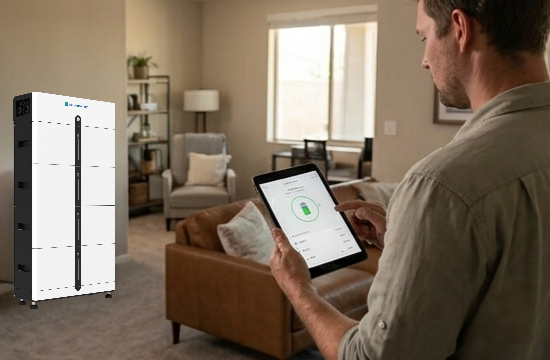
Maintaining off-grid battery banks requires careful control of charge levels, temperature, and routine inspection to ensure long-term performance. Proper solar battery maintenance not only reduces system failures but also helps extend solar battery lifespan, improve efficiency, and lower overall operational costs for residential and commercial users alike.
How to Maintain Battery Charge Levels: Partial State of Charge (PSOC) and Charge Controller Settings
Effective solar battery maintenance begins with managing charge levels correctly. Operating batteries within a Partial State of Charge (PSOC) range—typically between 20% and 80%—helps reduce stress on battery cells and significantly extend solar battery lifespan. Overcharging or deep discharging can accelerate degradation, especially in off-grid battery maintenance scenarios where systems are frequently cycled.
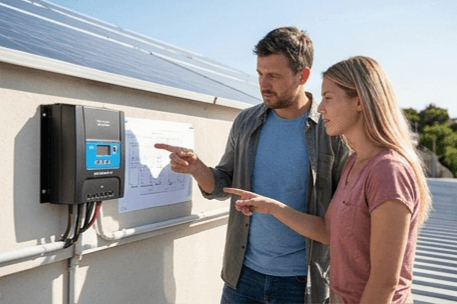
Modern charge controllers play a critical role in how to maintain solar batteries. Proper configuration of bulk, absorption, and float stages ensures balanced charging. For lithium-ion systems, maintaining stable voltage thresholds and avoiding prolonged 100% charge storage is essential. Advanced systems with Battery Management Systems (BMS), such as Hicorenergy solutions, provide real-time monitoring and automatic protection, optimizing solar battery maintenance performance without constant manual intervention.
Battery Terminal Cleaning, Corrosion Prevention, and Physical Inspection
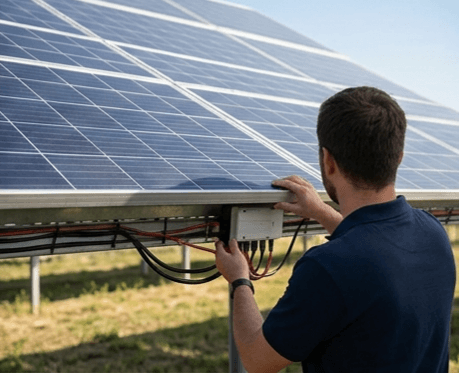
Routine inspection is a fundamental part of solar battery maintenance tips. Battery terminals should remain clean and corrosion-free to ensure efficient conductivity. Dust, moisture, or oxidation can increase resistance and reduce system efficiency. Applying anti-corrosion coatings and tightening connections regularly can prevent energy loss.
In off-grid battery maintenance systems, physical inspection also helps detect early signs of swelling, leakage, or loose wiring. These small issues, if ignored, can escalate into major failures. Consistent inspection not only improves reliability but also encourages users to adopt better practices in how to maintain solar batteries. Understanding these basics prepares users for deeper optimization strategies discussed next.
Optimal Temperature and Ventilation for Battery Storage
Temperature control is one of the most critical yet often overlooked aspects of solar battery maintenance. Batteries operate most efficiently within a temperature range of 15°C to 25°C. Exposure to extreme heat accelerates chemical reactions, leading to faster degradation, while low temperatures reduce charging efficiency and available capacity.
Below is a simple reference chart for temperature impact:
| Temperature Range | Performance Impact | Lifespan Effect |
|---|---|---|
| <0°C | Reduced capacity | Moderate damage |
| 15–25°C | Optimal | Maximum lifespan |
| >35°C | Overheating risk | Rapid degradation |
Proper ventilation ensures heat dissipation, especially in enclosed off-grid battery maintenance setups. Advanced systems such as Hicorenergy’s C5° series integrate thermal management and heating systems, maintaining optimal operating conditions even in extreme climates. This type of intelligent design is essential for users aiming to extend solar battery lifespan in diverse environments.
Additionally, installing batteries in shaded, dry, and well-ventilated areas significantly improves overall system efficiency. Temperature consistency reduces stress cycles, making solar battery maintenance more predictable and cost-effective.
State of Charge Management: Ideal Charging Windows and Storage Practices
Another essential factor in how to maintain solar batteries is managing the state of charge during both operation and storage. Keeping batteries within an ideal charging window—typically 30% to 80% for lithium-ion systems—helps minimize wear and maintain chemical stability.
For long-term storage, maintaining a 40%–60% charge level is widely recommended. This prevents both over-discharge and voltage stress. Off-grid battery maintenance systems often face irregular usage patterns, making automated monitoring crucial. Hicorenergy’s I-BOX 48100R, equipped with ≥6000 cycles at 90% DOD and over 95% efficiency, demonstrates how advanced battery design supports stable performance even under frequent cycling.
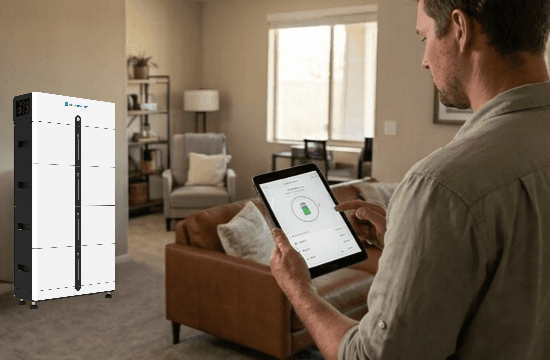
Smart monitoring systems further enhance solar battery maintenance by providing real-time data, remote diagnostics, and alerts. These features allow users to adjust usage patterns proactively, ensuring batteries operate within optimal parameters at all times.
Consistent adherence to these solar battery maintenance tips not only improves energy efficiency but also reduces replacement frequency, delivering long-term cost savings for both residential and commercial users.
Conclusion
Hicorenergy provides advanced lithium battery solutions designed for reliability, efficiency, and scalability. With intelligent BMS, high cycle life, and global support networks, its products ensure optimal solar battery maintenance and long-term performance for diverse off-grid applications.
Contact Guide
Email: info@hicorpower.com
WhatsApp: +86 181-0666-3226