Is the Battery Rebate actually ending, or are the rumors misleading distributors and installers across the energy storage market?
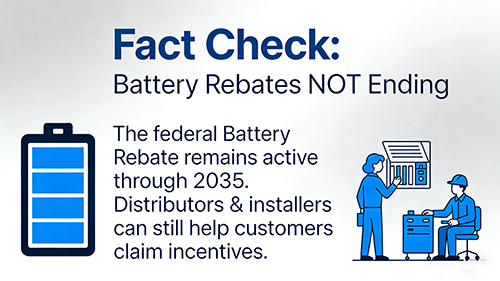
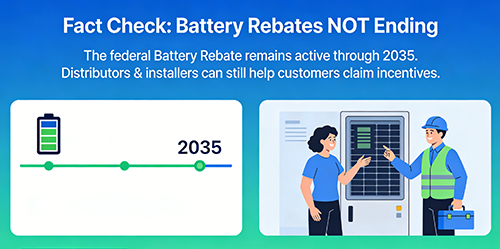
The federal Battery Rebate and tax credit programs supporting energy storage systems are not ending. Incentives established under current U.S. energy policy remain active and are scheduled to continue through 2035. Distributors and installers can still help customers access rebates and tax credits when installing eligible battery storage systems.
What’s the Real Status of Federal Battery Tax Credits in 2026–2035?
The federal Battery Rebate landscape remains stable through the next decade. Energy storage systems qualify for the federal investment tax credit (ITC) under current legislation, allowing homeowners and businesses to claim a significant percentage of installation costs.
Standalone battery storage systems are also eligible, meaning installations no longer need to be paired with solar panels to qualify. The program is designed to remain active through 2035, gradually stepping down after that period. For distributors and installers, this long-term incentive structure provides market certainty and encourages continued growth in battery storage adoption.
Why Rumors of Battery Rebate Cancellations Are Misleading
Rumors about the cancellation of the Battery Rebate often arise from misunderstandings of policy updates, state-level adjustments, or misinformation circulating online. In reality, most federal incentives remain intact, while individual states periodically adjust their rebate structures based on budget allocations or program demand.
Another source of confusion comes from changing eligibility requirements or application deadlines in certain regions. These administrative updates are sometimes incorrectly interpreted as full cancellations. Industry experts and reliable energy information platforms emphasize that the broader federal incentive framework still supports battery storage adoption. For installers and distributors, verifying policy updates through official government energy departments and credible industry sources remains the most reliable way to avoid misinformation.
Current Battery Incentive Eligibility Rules for Installers & Distributors
Understanding Battery Rebate eligibility rules is essential for distributors and installers who want to support their customers effectively. Incentives typically require certified battery systems, professional installation, and compliance with electrical and safety regulations. In many cases, installers must also provide documentation verifying system capacity, performance standards, and commissioning details.
Because rules vary between states and utility programs, professionals should regularly check updated requirements before submitting rebate applications. Staying informed ensures projects qualify for available incentives and helps customers maximize the financial benefits of installing energy storage systems.
State-Level Battery Rebates & Incentives Still Active in 2026
Although federal incentives provide the foundation for Battery Rebate programs, state-level incentives remain equally important in 2026. Several states continue offering rebates, performance-based incentives, or energy storage grants to accelerate the transition toward distributed energy systems.
These programs are often designed to support grid resilience, reduce peak demand, and encourage households to adopt backup power systems. In regions with unstable electricity supply or high peak energy prices, battery storage provides clear economic value when combined with available rebates.
State incentive programs may include direct installation rebates, tax credits, or performance-based compensation for energy storage systems participating in grid services. Some utilities also provide additional benefits for batteries that support demand response or virtual power plant programs.
For distributors and installers, understanding regional incentive structures allows them to design more attractive project proposals. Combining federal incentives with state-level Battery Rebates can significantly reduce upfront installation costs, making energy storage solutions more accessible to residential and commercial customers.
How the IRA Keeps Battery Storage Rebates Available Through 2035
The long-term stability of the Battery Rebate market largely comes from the policy framework established by the Inflation Reduction Act (IRA). This legislation expanded federal support for renewable energy technologies, including standalone battery storage systems.
Under the IRA framework, energy storage installations can receive tax credits covering a percentage of total project costs. These incentives are designed to remain available until 2035, with gradual step-downs scheduled after certain milestones.
This extended timeline provides significant confidence for distributors, installers, and project developers. Companies can plan long-term supply chains, training programs, and installation services knowing that incentives will continue to support market demand.
For property owners, the IRA also improves financial returns on battery investments. When combined with time-of-use electricity savings, backup power benefits, and grid service participation, the effective payback period for battery storage systems becomes much shorter. As a result, market demand for residential and commercial battery solutions is expected to continue expanding throughout the next decade.
Key Steps for Distributors to Verify Rebate Availability for Customers
To ensure customers receive the correct Battery Rebate benefits, distributors and installers should follow several verification steps before recommending a battery storage system.
First, they should review current federal tax credit eligibility and confirm the battery system meets the required capacity and certification standards. Next, installers should verify whether local utilities or state governments offer additional rebate programs that can be combined with federal incentives.
Product selection also plays an important role in rebate eligibility. Reliable battery systems with certified safety standards and strong performance specifications are more likely to meet program requirements. Hicorenergy provides a range of energy storage solutions designed for residential and commercial applications, including scalable lithium battery systems with high efficiency, long cycle life, and wide inverter compatibility.
The company develops lithium battery storage systems using automotive-grade LiFePO4 cells, advanced battery management systems, and modular designs suitable for both home backup power and commercial energy management. These solutions can support applications such as peak shaving, backup power, and solar energy storage while maintaining high efficiency and safety standards.
Distributors who work with reliable suppliers and certified battery systems can reduce project risks while helping customers access available incentives with confidence.
Conclusion
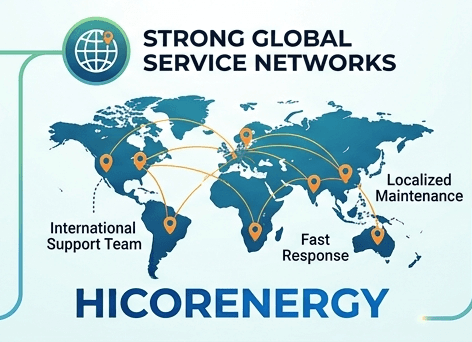
Battery Rebate programs remain active through 2035, providing strong incentives for energy storage adoption. With reliable lithium battery systems, scalable solutions, and global service support, Hicorenergy helps distributors and installers deliver efficient, safe, and rebate-eligible energy storage projects worldwide.
Contact:
Email: info@hicorpower.com
WhatsApp: +86 181-0666-3226